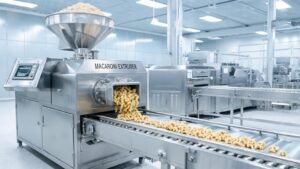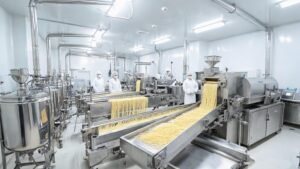
The perfect pasta. It’s not just about the sauce. The soul of a great spaghetti or macaroni lies in its texture—that ideal balance between firmness and tenderness, often described as al dente. For decades, achieving this consistently was an art form, passed down through generations. Today, it’s a science. And at the heart of that science is the industrial macaroni extruder.
For food production lines, the extrusion process is more than just a shaping step. It’s a critical phase where raw ingredients are transformed into a high-quality product. But what exactly happens inside that machine? Why does one extruder produce perfect macaroni, while another yields sticky, mushy pasta?
This guide delves into the science behind pasta extrusion technology. We’ll explore the working principles of a macaroni extruder, explain how it affects texture quality, and show you how a robust industrial system can be the difference between a good product and a great one. If you are looking to upgrade your facility or start a new venture, understanding this science is your first step toward pasta perfection.
What is Pasta Extrusion?
Before we dive into the machinery, we need to understand the fundamental process. Extrusion, in food science, is a process that forces a mixed dough through a specially shaped opening in a die to create a specific shape. Think of a Play-Doh machine, but on an industrial scale and with far more sophisticated chemistry.
For pasta, this process does three things simultaneously:
- Mixes & Kneads: It combines semolina flour and water (or other ingredients) into a uniform, hydrated dough.
- Cooks & Stabilizes: The friction and pressure within the extruder generate heat, partially cooking the starches and setting the protein network. This is what transforms a sticky dough into a cohesive, firm structure.
- Shapes: The dough is forced through a die (the metal plate with the macaroni, spaghetti, or penne holes) to give it its final form.
How Pasta Extrusion Affects Texture Quality is not just about the die shape. It’s about controlling the environment inside the extruder to create a strong, resilient matrix of gluten and starch.
The Science Inside a Macaroni Extruder: Working Principle Explained
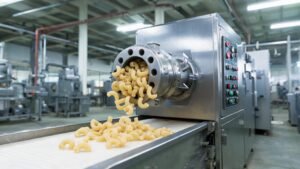
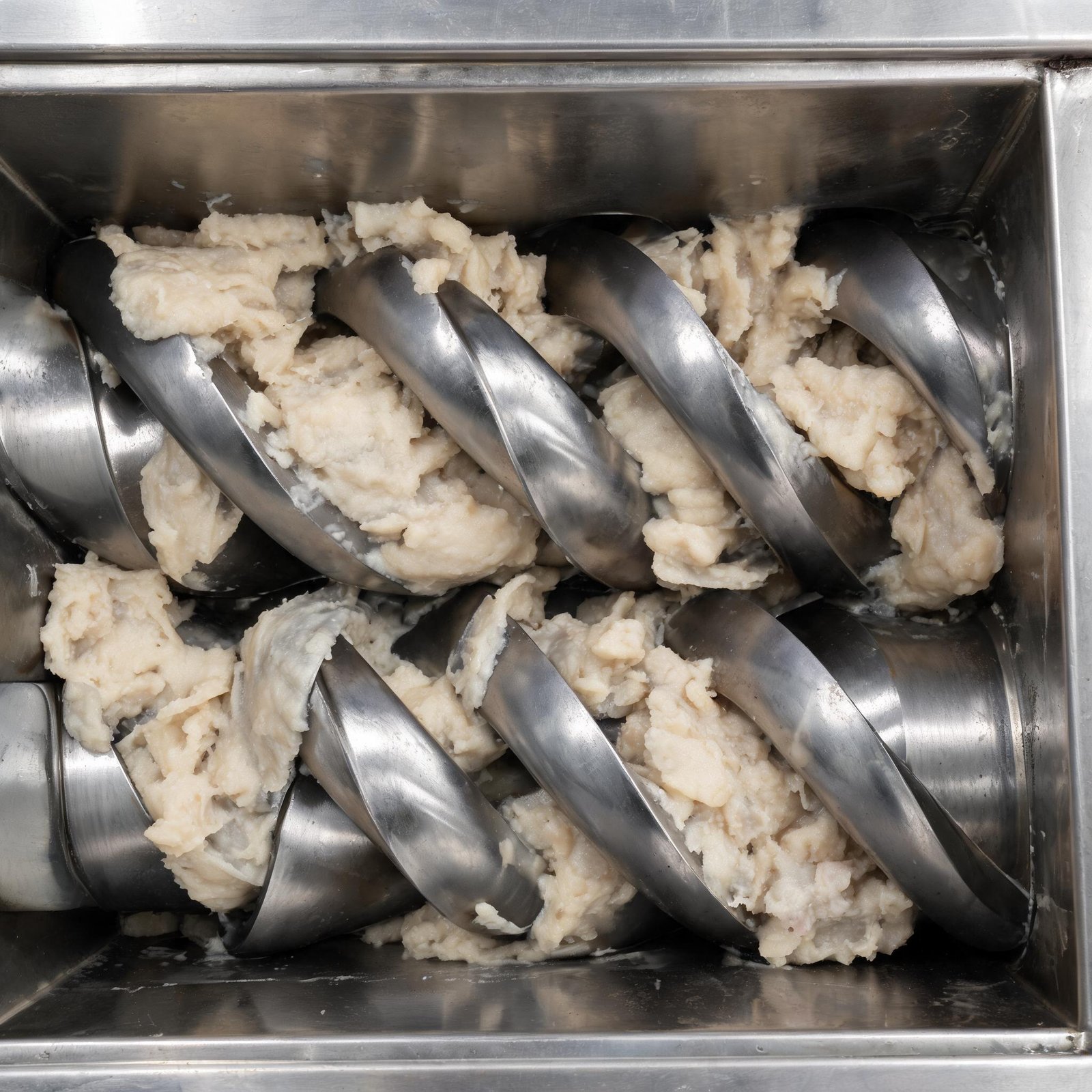
The macaroni extruder working principle explained starts with a seemingly simple concept: a large screw turns inside a closed barrel, pushing the dough towards the die. But the reality is a complex interplay of mechanics, thermodynamics, and material science.
1. The Role of Hydration & Mixing
The process begins with the mixer. Semolina flour is dosed with a precise amount of water—typically between 28% and 32% by weight. Too little water, and you get white, uncooked spots in your pasta. Too much, and the dough becomes too sticky to handle and will collapse during cooking.
The first stage of the extruder is where this mixture is turned into a uniform, crumbly dough. The key here is not just the amount of water, but the quality of its distribution. A poorly mixed dough has inconsistent hydration, leading to a weak, unpredictable protein network.
2. The Transformation Zone: Building the Gluten Network
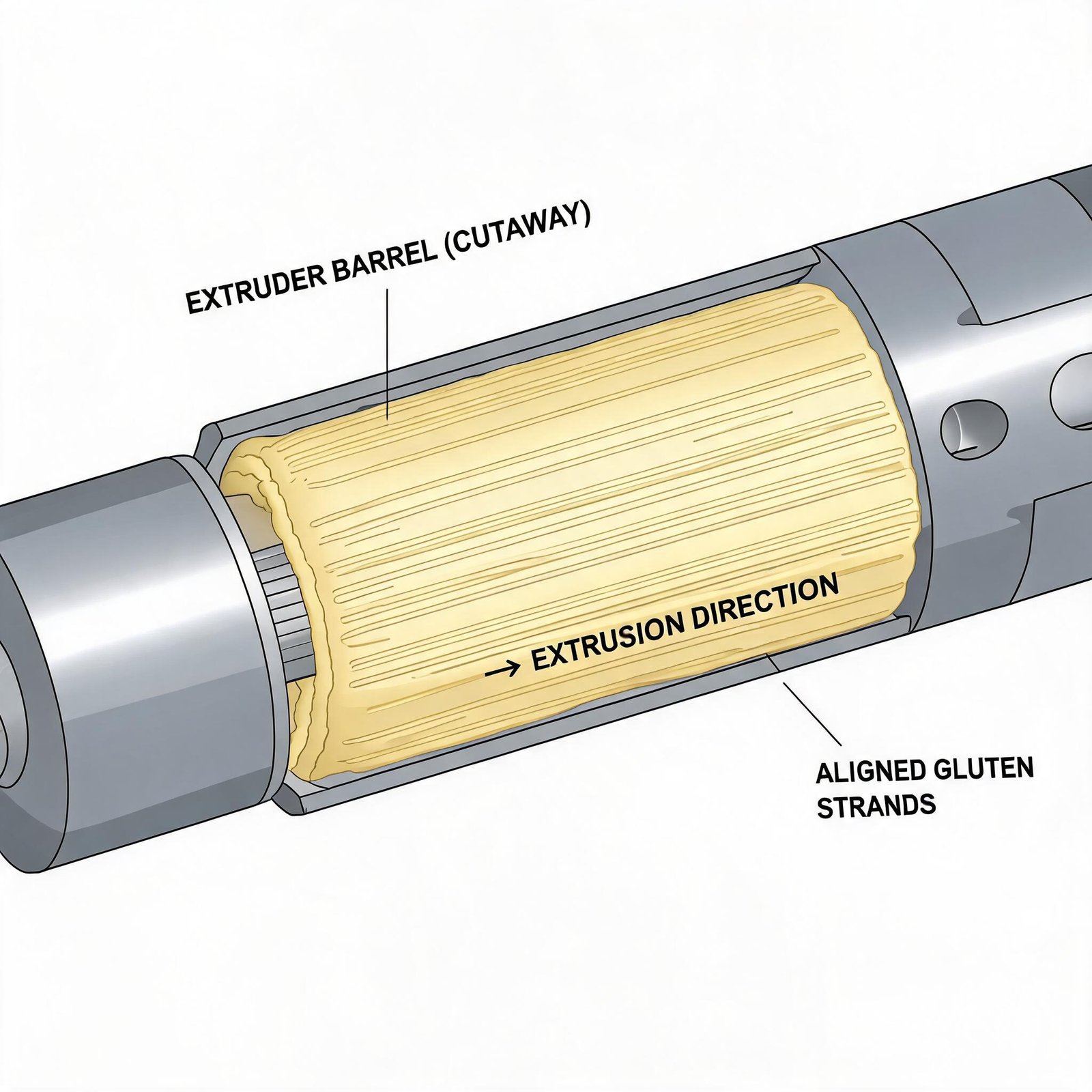
Once mixed, the dough enters the main barrel of the extruder. As the screw turns, mechanical energy is transferred to the dough. This is where the science gets fascinating.
- Pressure Builds: The narrowing flight of the screw and the resistance of the die create immense pressure, sometimes exceeding 100 atmospheres.
- Temperature Rises: The friction of this process generates heat. Controlling this temperature is crucial. Ideally, the temperature should stay below 50°C (122°F). If it gets too hot (above 70°C), the gluten proteins will denature and lose their ability to form a long, elastic network. This results in a weak, fragile pasta that will fail during cooking.
This zone is where the gluten strands are aligned and stretched, creating the backbone of your pasta’s final texture. A well-designed extruder with precise temperature control ensures a strong, resilient network develops here. This is the domain of pasta extrusion technology at its finest.
3. The Die & Cutting Head: The Final Touch
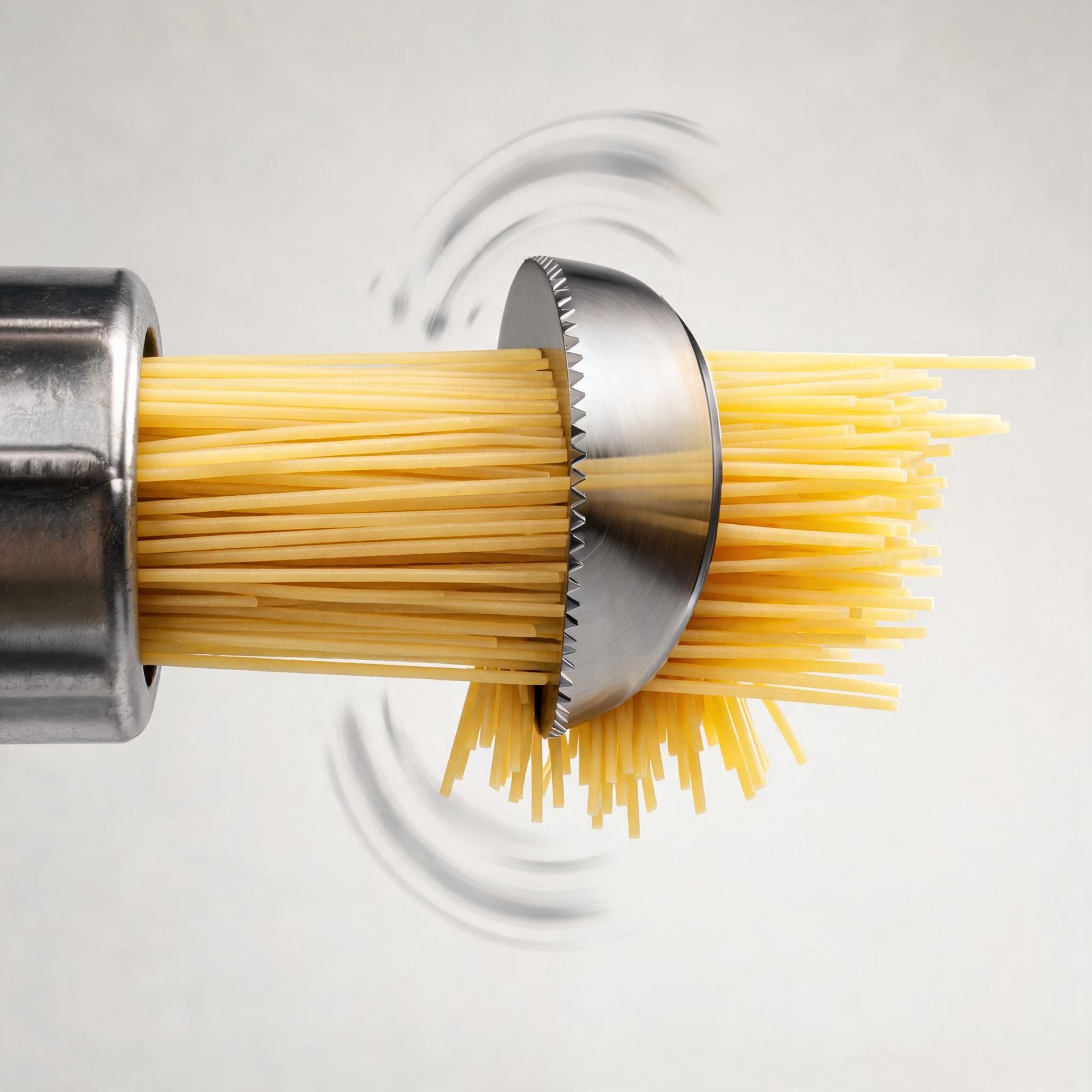
The die is the final obstacle for the dough. It’s a thick metal plate with hundreds or thousands of tiny holes. The material of the die insert has a massive impact on the final product.
- Teflon-coated Dies: Create a smooth, shiny surface. This is the standard for high-speed, industrial production and produces a more uniform, brighter pasta.
- Bronze Dies: Create a rough, porous surface. This pasta is more absorbent, which means it grabs onto sauce better. It’s often considered a premium product, but the rough surface also creates micro-fractures, making the pasta more fragile and slower to produce.
Just after exiting the die, a rotating blade cuts the pasta to the desired length. The blade’s speed must be perfectly synchronized with the extrusion rate to ensure every piece is uniform.
The Complete Production Line: From Flour to Finished Pasta
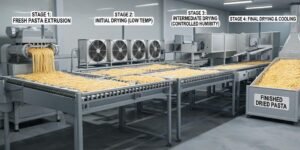
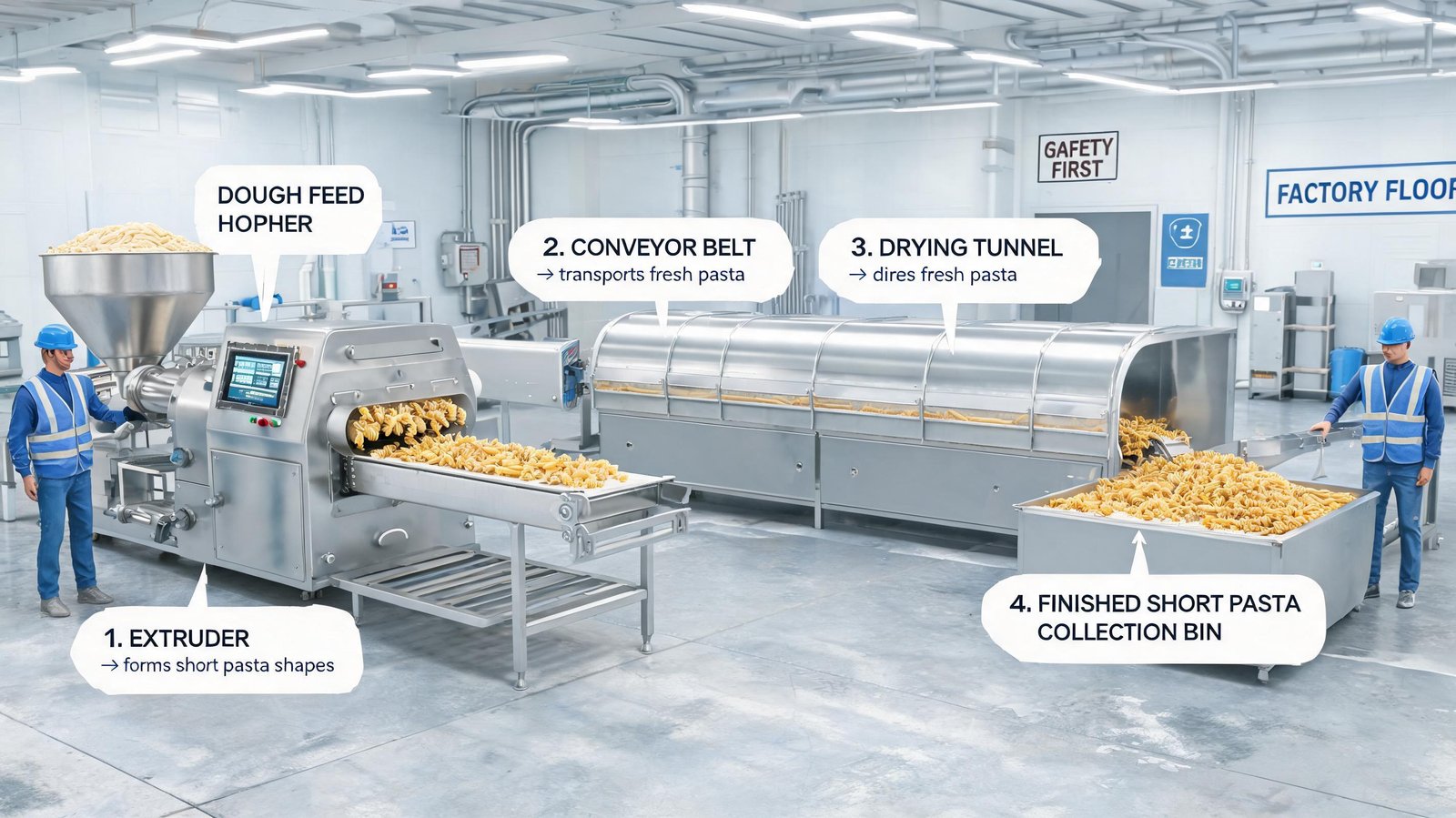
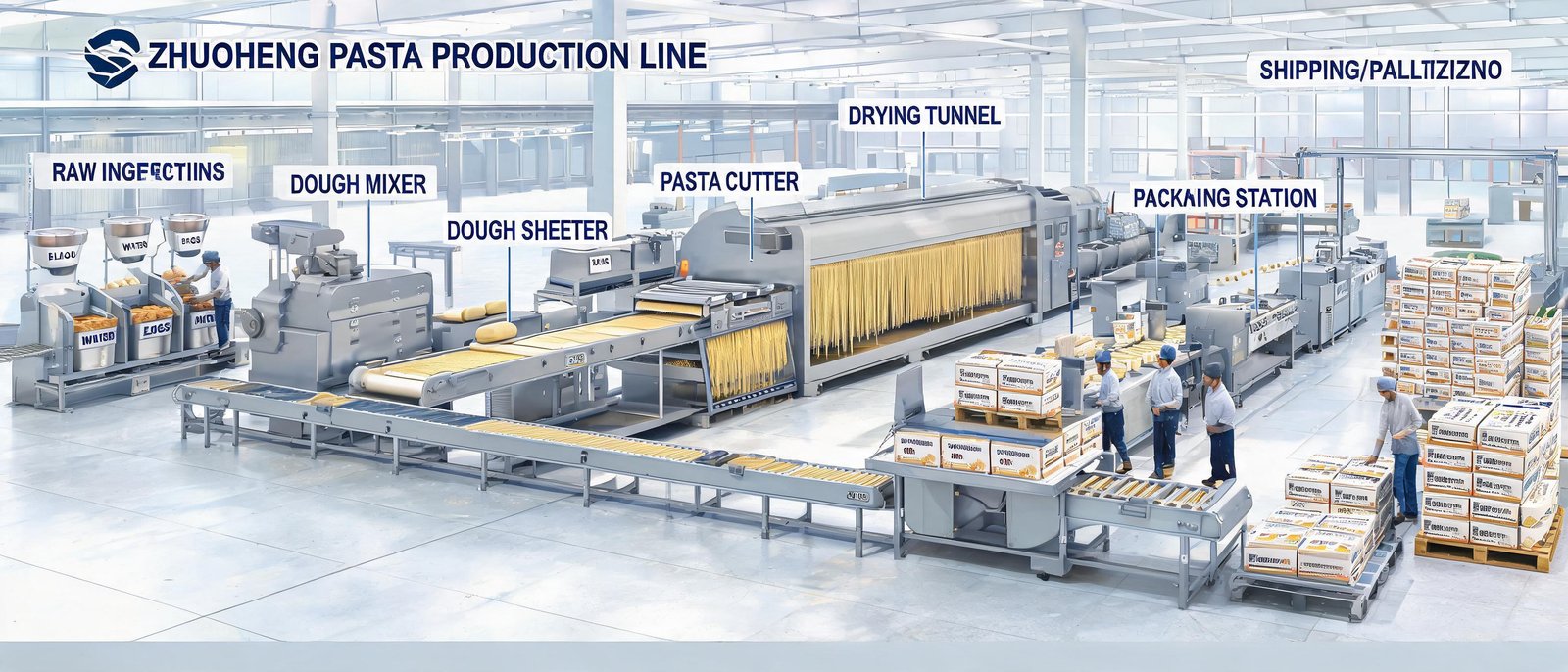
While the macaroni extruder is the heart of the line, it is just one part of a complete Pasta Macaroni Production Line. Before and after the extruder, other critical steps define the final quality.
Drying: The Unsung Hero of Texture
Many believe that an extruder alone creates perfect pasta. This is a myth. Immediately after extrusion, the pasta is soft, sticky, and highly perishable. It is the dryer that transforms it into a shelf-stable product with the desired al dente texture.
The Science of Pasta Drying
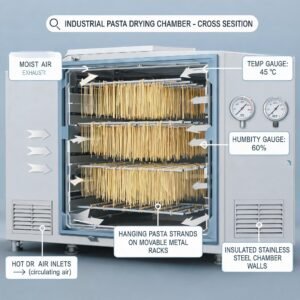
The goal of drying is to remove water from about 30% down to 12.5%, which allows it to be stored for years. But how you remove the water is critical.
- Low-Temperature Drying (40-50°C / 104-122°F): This is a slow process that takes 15-20 hours. It preserves the natural flavor of the wheat and creates a very subtle texture, but it is not very efficient.
- High-Temperature Drying (70-90°C / 158-194°F): This is the industrial standard. It takes 4-6 hours and creates a product that is stronger, cooks more firmly, and has a better yellow color. However, it can also lead to “heat damage” (the Maillard reaction), which darkens the pasta and creates slightly bitter flavors if not controlled.
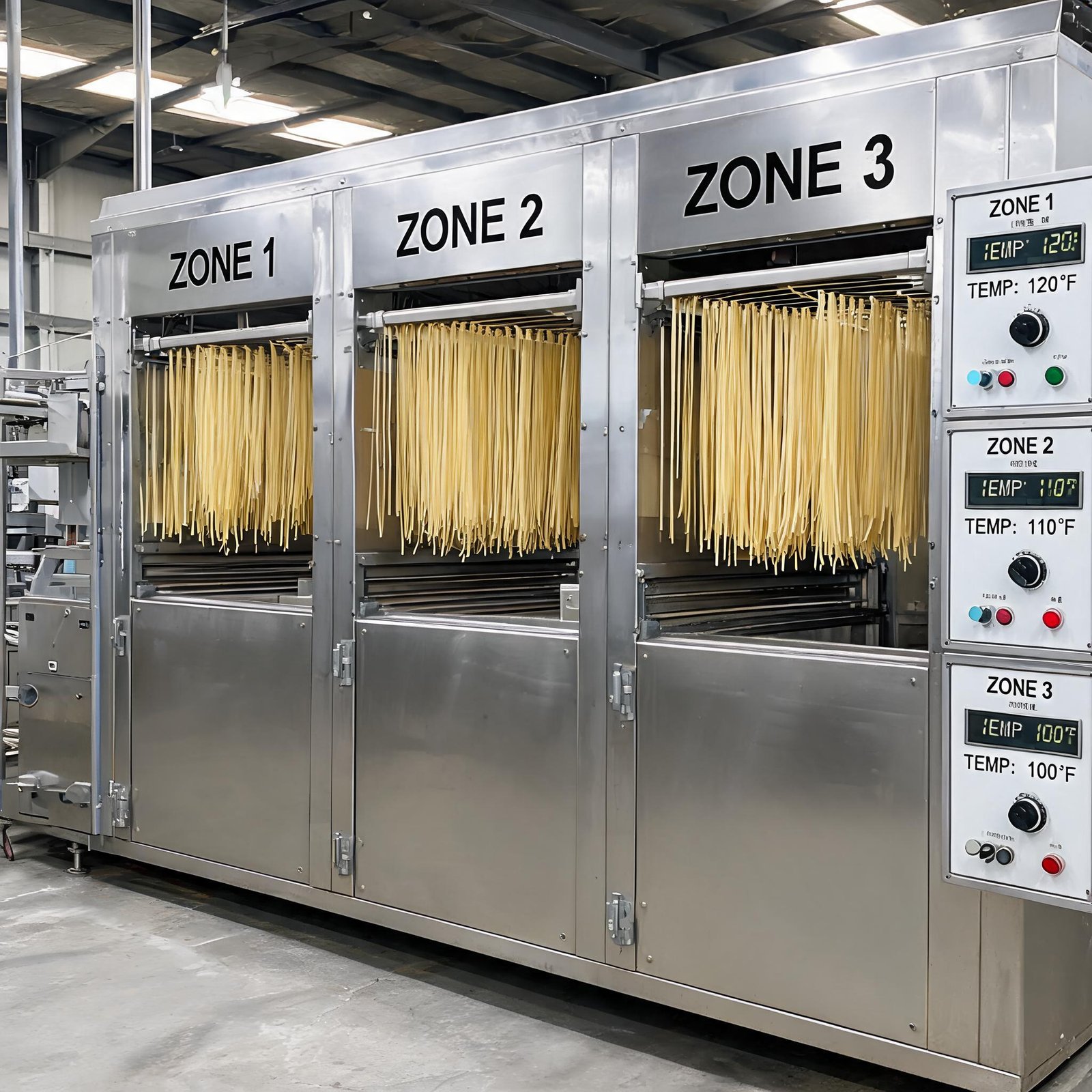
The dryer must carefully control both temperature and humidity. If the air is too dry, the outer surface of the pasta dries quickly and forms a hard shell while the inside remains wet. When the internal water tries to evaporate, it creates stress fractures, making the pasta fragile. A good drying system introduces high-humidity air at the start of the process to prevent this “case-hardening,” allowing the water to escape evenly from the inside out.
How We Ensure Perfect Pasta: The ZhuoHeng Advantage
For buyers of processing lines, understanding the science is vital, but what you really need is reliable, consistent hardware that can deliver that science day after day. That is where the engineering of ZhuoHeng comes into play.
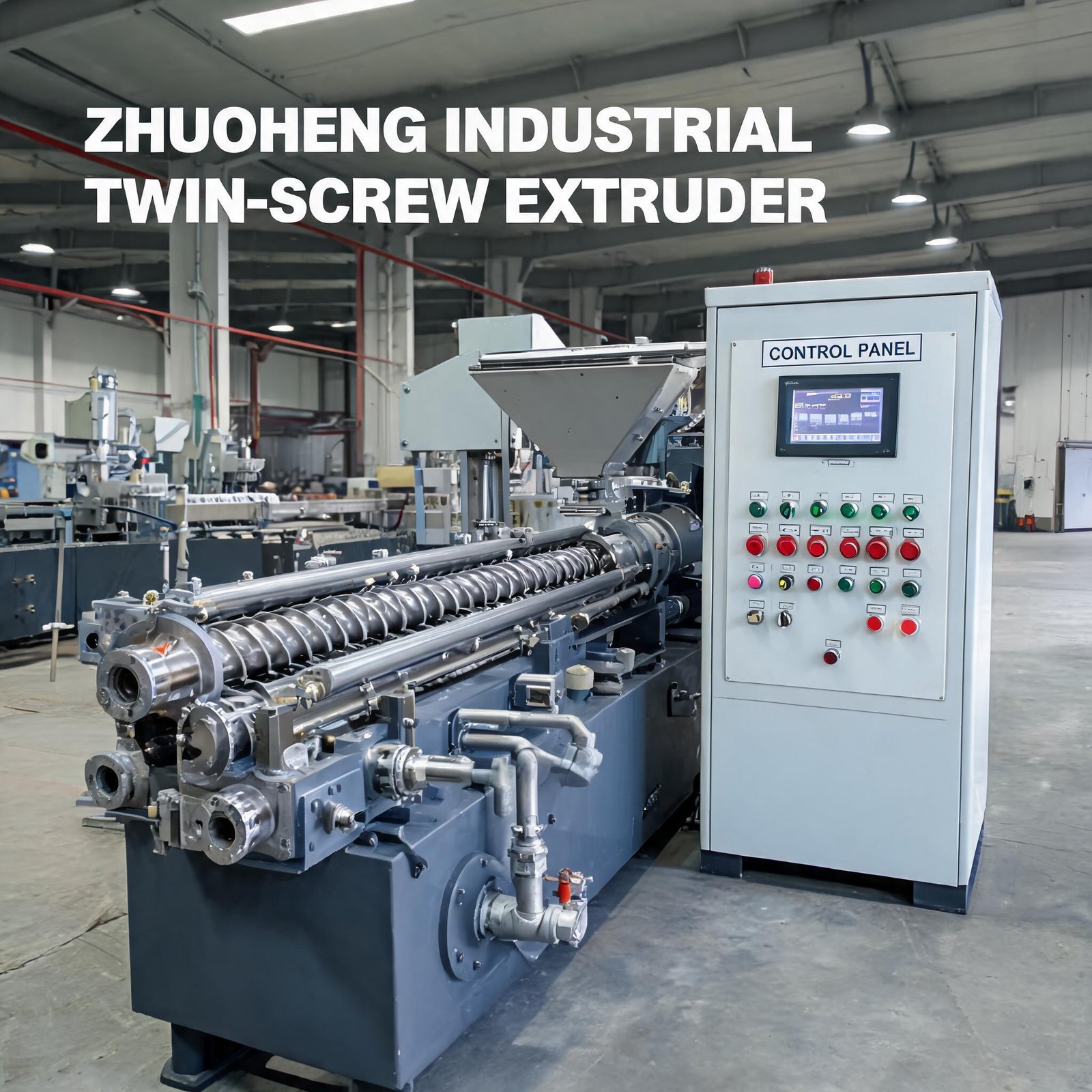
Our macaroni extruders and complete production lines are not just built for high throughput; they are built for precision.
- State-of-the-Art Temperature Control: Our extruders feature advanced cooling jackets and PLC-controlled systems that maintain the ideal 45-50°C range in the critical transformation zone. This prevents protein denaturation and ensures a strong gluten network.
- High-Performance Hydration System: The dough mixing stage of our Zhuohengextruder systems uses a specialized pre-mixer that hydrates every single particle of semolina in seconds, eliminating white spots and ensuring a uniform dough.
- Bronze & Teflon Die Options: We offer both bronze and Teflon-coated die inserts, allowing you to tailor your product to the exact market demand, whether it’s a high-speed, shiny macaroni or a premium, sauce-grabbing spaghetti.
Why Choose a Complete System from ZhuoHeng?
Buying an extruder from one supplier and a dryer from another is a recipe for inconsistency. Your entire production line must act as a single, integrated organism.
When you build a Pasta Macaroni Production Line with ZhuoHeng, you get a system that is mathematically modelled from start to finish. The output of our mixer is perfectly calibrated to the intake of our extruder. The extruder’s output pressure is perfectly matched to the dryer’s air velocity and temperature. This integration eliminates variables, ensuring that every single piece of pasta from a given batch has the exact same shape, moisture content, and predicted cooking quality. This is the promise of our pasta extrusion technology.
- Lower Operating Costs: A more consistent dough means less waste. Our efficient screw design reduces specific mechanical energy (SME), lowering your electricity bill.
- Faster Production: Our integrated control system allows for faster startup and easier changeover between pasta shapes.
- Superior Final Texture: By controlling every step of the industrial pasta extrusion process science, from hydration to drying, our customers consistently report a higher percentage of Grade A pasta.
Key Applications: Beyond Traditional Pasta
The science of extrusion is versatile. While durum wheat semolina remains the gold standard for traditional pasta, the working principle of a macaroni extruder is being applied to create a new generation of products.
1. Gluten-Free Pasta
The challenge here is the lack of a gluten network. The extruder must work harder to align other starches (like those from rice or corn) and proteins (like from legumes) to create a stable structure. Our Zhuohengextruder systems can be precisely tuned with higher shear forces to create a strong, non-gluten matrix that doesn’t disintegrate in water. This engineering principle is similar to how we approach a Pet Food Production Line, where diverse ingredients must be perfectly textured.
2. High-Fiber & Functional Pasta
Adding bran, oat fiber, or legume flours (like chickpea or lentil) is very popular now. But these ingredients compete with the gluten for water and disrupt its structure. Our advanced hydration system and precise screw geometry allow us to formulate these difficult recipes without sacrificing texture quality, a process control also critical in a Modified Starch Production Line.
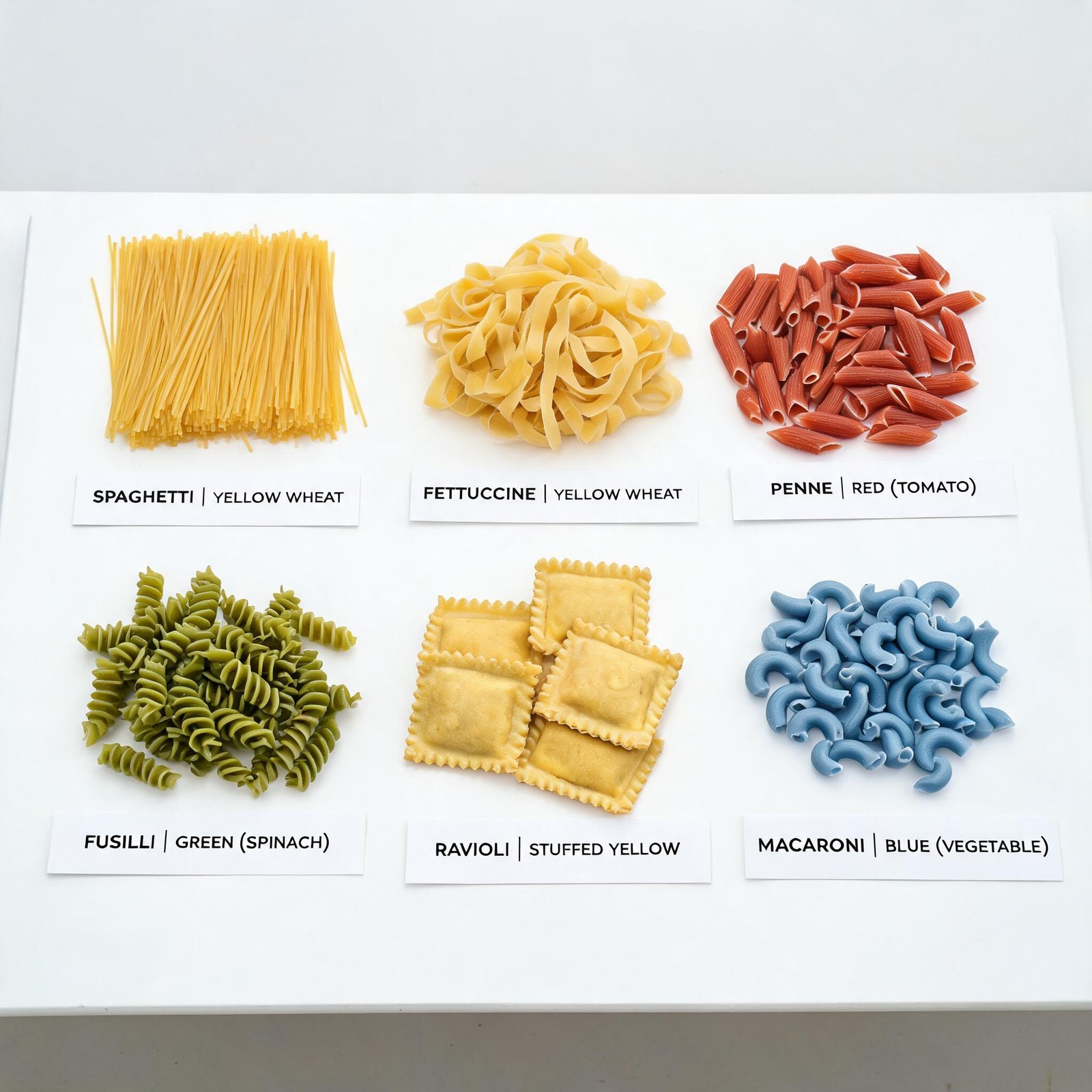
3. Vegetable-Enriched Pasta
Spinach, tomato, and beet powder are common additions. However, they alter the dough’s moisture profile and can cause color fading. Our temperature-controlled extrusion preserves the natural pigments and ensures the final product has a vibrant, stable color.
Solving the Common Quality Problems
Every pasta maker eventually faces these problems. Understanding the science is the only way to solve them.
Problem: High Cooking Loss & Sticky Pasta
- The Science: This is a sign of a weak or incomplete protein network. The starch granules are not being properly trapped within the gluten matrix, so they leach out into the cooking water.
- The Solution: Check your extrusion temperature. It might be too high, denaturing the gluten. Also, check your hydration level. It might be too high, creating a slack dough that doesn’t build enough pressure in the extruder. Our Zhuohengextruder systems allow for micro-adjustments of both temperature and pressure to solve this.
Problem: White Spots (“Menta”)
- The Science: This indicates a lack of proper hydration. A dry clump of semolina did not get enough water or time to hydrate before being forced through the die.
- The Solution: Your pre-mixer might be insufficient. A system that offers a longer residence time for hydration, like the one built into our lines, can eliminate this problem.
Problem: Checked or Cracked Pasta
- The Science: This is almost always a drying problem. It is caused by a high stress gradient inside the pasta piece, often due to rapid, uneven drying.
- The Solution: The initial stages of your dryer must have a very high relative humidity to prevent case-hardening. A multi-zone dryer with precise humidity control, like our industrial models, is essential.
Optimization & Control: Your Partner for Scale-Up
Taking a product from a lab bench or a small-scale kitchen to an industrial line is a massive challenge. The single most important factor for a successful scale-up is choosing a partner who understands both the science and the engineering.
When you work with us, you are not just buying a machine. You are buying a team of food scientists and process engineers who can help you with:
- Recipe Formulation: We can test your formulas on our pilot plant extruders to find the optimal set point for your specific product.
- Process Optimization: We will help you set up your entire line to ensure a low waste rate and maximum uptime.
- After-Sales Support: Our team is available 24/7 to help you troubleshoot any issues, from a simple bearing replacement to a full-scale process re-engineering.
The Nutritional Dimension
Modern consumers are not just looking for good taste. They want food that is healthy. The science of extrusion plays a direct role in the nutritional profile of your final product.
- Starch Digestibility: The dense protein network formed in a well-designed macaroni extruder physically encapsulates starch granules. This slows down how quickly your body can break them down. This is why good quality pasta has a lower glycemic index (GI) compared to other wheat-based foods like bread. High-temperature drying also increases the formation of “resistant starch,” which acts like a prebiotic fiber.
- Protein Quality: The heat and shear of extrusion can actually increase the digestibility of certain proteins, especially in non-wheat flours. However, if the temperature gets too high, it can cause a Maillard reaction that locks up essential amino acids like lysine, making them less bioavailable. Our system’s precise temperature control helps you maximize the nutritional value, not just the texture.
Conclusion: Invest in the Science
Producing perfect pasta on an industrial scale is a definitive challenge. It requires a deep understanding of the industrial pasta extrusion process science, from the initial hydration of the flour to the complex thermodynamic physics of the dryer.
It’s not just about buying a machine that can push dough through a die. It is about investing in a production line that acts as a precise, automated, and intelligent system.
By choosing ZhuoHeng, you are choosing a partner that provides that integrated system. You are choosing a macaroni extruder that’s built by engineers who understand the science of gluten development, and a dryer that understands the physics of moisture migration. You are choosing to say goodbye to inconsistent batches, high waste, and texture complaints.
Ready to transform your production line? Contact our team today to discuss your specific needs and let us help you engineer the perfect pasta.
ZhuoHeng — Where Science Meets Precision.