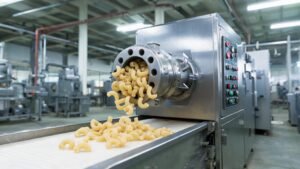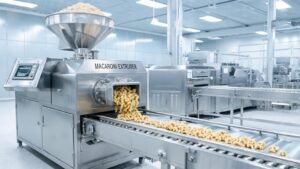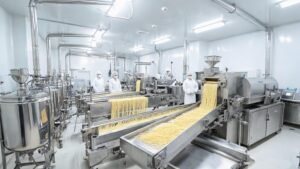
A pasta extruder is a specialized machine that forces mixed dough through a shaped die under pressure to create specific noodles—particularly hollow, textured shapes like penne, rigatoni, and fusilli. Recently, searches for the best pasta extruder for home kitchen setups and commercial back-of-house spaces have surged. Home cooks are eager to bypass highly processed store options for fresh, clean-label alternatives, while small businesses and restaurants are looking to curb rising labor costs and command higher menu margins with signature, house-made pasta.
Whether you are trying to find a reliable, small-footprint countertop unit for quick weeknight family dinners or scaling up a commercial kitchen to produce consistent bulk batches, this guide breaks down the absolute best machines on the market. Whether you’re making fresh pasta for your family or planning to launch a pasta business, this guide will help you choose the right machine.
Quick Match & Picks
If you are looking for a quick recommendation, here is our expert-selected pairing guide based on different scales of use and budget needs.
🏆 Best Overall for Home: Philips Pasta Maker Plus (Unmatched convenience and automated workflow for home kitchens).
🥈 Best Budget Home Pick: KitchenAid Pasta Attachment (The most cost-effective way to get started if you already own a stand mixer).
🥇 Best Commercial Extruder: Zhuoheng Commercial Pasta Extruder (The gold standard for restaurants, labs, and small-to-medium wholesale businesses).
| If you are... | Best Choice | Why It Fits |
|---|---|---|
| Beginner | Philips Pasta Maker | Fully automated mixing and direct extrusion |
| Weekend Home Cook | Marcato + Pasta Drive | Classic, satisfying manual feel with motorized assist |
| Pasta Enthusiast | Imperia + Motor | Heavy-duty steel build that handles frequent home use |
| Small Coffee | Small Commercial Extruder | True bronze-die texture in a modest footprint |
| Restaurant | Commercial Pasta Extruder | Industrial-grade continuous production for daily service |
| Factory / Wholesale | Automatic Production Line | Fully automated, high-output continuous systems |
Our Top 6 Pasta Extruders at a Glance
For those ready to buy, here is a high-level comparison of the top-performing models in terms of output, price range, and baseline consumer satisfaction.
| Machine | Best For | Capacity | Price | Rating |
|---|---|---|---|---|
| Philips Pasta Maker Plus | Busy Home Kitchens | 0.5 kg / batch | $250 - $300 | 4.6/5 |
| Marcato Atlas 150 + Pastadrive | Traditionalists (Home) | Manual feed / continuous | $180 - $220 | 4.8/5 |
| Imperia Titania + Motor | Dedicated Home Enthusiasts | Manual feed / continuous | $150 - $190 | 4.5/5 |
| KitchenAid Pasta Attachments | Stand Mixer Owners (Home) | Small batch | $100 - $150 | 4.3/5 |
| Small Commercial Pasta Extruder | Cafés & Small Bistros | 5 - 10 kg / hr | $1,500 - $3,000 | 4.7/5 |
| Zhuoheng Commercial Extruder | Restaurants & Small Businesses | 15 - 50 kg / hr | Custom Quote | 4.9/5 |
Detailed Reviews of the Best Pasta Extruders
1. Philips Pasta Maker Plus
Best For: Busy home cooks who want fresh pasta on the table in under twenty minutes with zero manual kneading.
Pros: Fully automated mixing, kneading, and extruding; dishwasher-safe parts; clean-up is exceptionally easy once the dough leftovers dry out.
Cons: Limited to small home batches; mostly plastic internal components; struggles with traditional, ultra-stiff commercial semolina doughs.
Key Features: Automatic weighing function; auto-extruding technology; comes with 4 standard shaping discs.
Our Verdict: In typical home use, users often appreciate how this machine consistently produces evenly extruded penne and spaghetti without noticeable motor overheating, making it an excellent best pasta extruder for home kitchen setups.

2. Marcato Atlas 150 + Pastadrive
Best For: Traditionalists who love old-school Italian methods but want a motorized break from manual hand-cranking.
Pros: Exceptional Italian-made build quality; precise thickness control; classic roller design creates flawless sheets.
Cons: It is a roller/cutter, not a true hollow-shape extruder (no rigatoni or penne); requires solid table clamping.
Key Features: Anodized aluminum rollers; 10-position thickness adjustment dial; detachable 120V motor.
Our Verdict: Based on its structural design and intended use, the Atlas 150 is the gold standard for flat sheets (lasagna, tagliatelle). It is highly durable, but remember: it will not squeeze out hollow tubes.
Marcato Atlas 150 System.
3. Imperia Manual + Motor
-
Best For: Dedicated home enthusiasts looking for rugged, steel construction that easily stands up to frequent use.
-
Pros: Heavy-duty chrome steel body; incredibly reliable motor attachment; classic tactile feel.
-
Cons: Heavy to store; cleaning requires dry-brushing rather than running under water (to avoid rust).
-
Key Features: Built-in dual cutters; optional motor extension; Italian manufacturing heritage.
-
Our Verdict: Based on its design and intended use, this is a highly reliable option for families who want a durable, long-lasting machine to run weekly batches of traditional flat pasta styles.
4. KitchenAid Pasta Attachment Set
-
Best For: Casual home cooks who already own a KitchenAid stand mixer and want to save counter space.
-
Pros: Leverages your existing mixer’s powerful motor; very small storage footprint; budget-friendly.
-
Cons: Can easily strain the mixer motor if your dough formulation is too dry; slow overall extrusion speed.
-
Key Features: Powered entirely by the mixer’s front hub attachment; simple interchangeable plastic shaping dies.
-
Our Verdict: During typical home use, users often appreciate how easily this attachment slides into place, but warn that you must closely monitor dough moisture to avoid putting excessive stress on your mixer’s motor.
5. Small Commercial Pasta Extruder
-
Best For: Small boutique cafés, specialty bistros, or upscale dining spots preparing 5 to 10 kilograms of pasta daily.
-
Pros: Uses professional brass or bronze dies for high-texture pasta; stainless steel mixing hopper; reliable continuous extrusion.
-
Cons: Requires dedicated kitchen space; steep learning curve for water-to-flour ratios; high initial cost for startups.
-
Key Features: Industrial-grade auger drive; built-in cooling fan options; independent mixing and extruding controls.
-
Our Verdict: This machine bridges the gap between home kitchen hobbies and commercial output. If you are starting a micro-business and need professional-grade, sauce-clinging texture on a budget, this is the place to start.
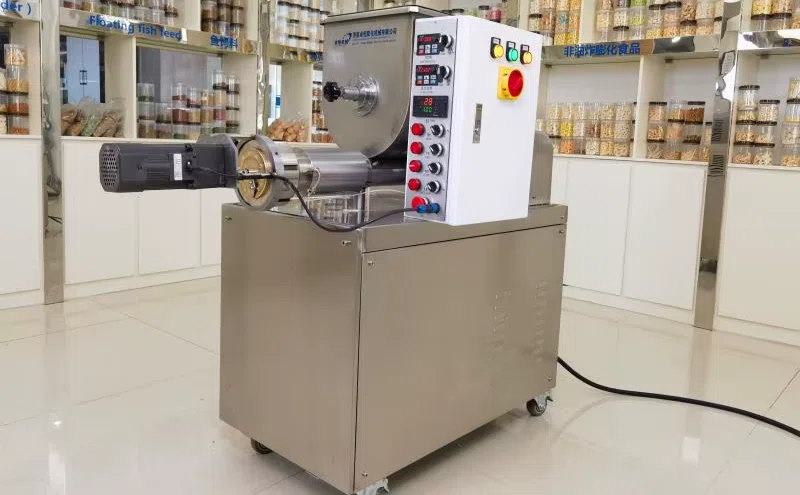
6. Zhuoheng Commercial Pasta Extruder
Best For: Restaurants, test kitchens, regional catering hubs, and growing food brands looking to scale daily production seamlessly.
Pros: Industrial-grade single/twin-screw extrusion system; high continuous hourly output; customizable die plates for proprietary shapes; heavy-duty stainless steel built to run for hours without thermal shutdown.
Cons: Over-engineered for a standard residential kitchen; requires professional kitchen space and power connections.
Key Features: Precision variable speed and temperature controls; food-safe stainless steel design; rapid-disassembly screw for thorough sanitization.
Our Verdict: A robust, professional-tier asset for operations transitioning from manual batches to true commercial volume. It delivers industrial consistency and unmatched reliability without forcing you to buy a massive, multi-million-dollar factory setup.
Technical Comparison Table
To truly understand what you are paying for, look at how the specifications scale as you move from residential countertops to professional, heavy-duty machinery.
| Feature | Home Kitchen Extruders | Small Commercial Extruders | Zhuoheng Commercial Extruders |
|---|---|---|---|
| Price Range | $100 - $300 | $1,500 - $3,000 | Custom Quote |
| Hourly Capacity | 0.5 - 1 kg / hr | 5 - 10 kg / hr | 15 - 50+ kg / hr |
| Noise Level | Low (55 - 65 dB) | Moderate (70 - 75 dB) | Moderate (Heavy industrial insulation) |
| Cleaning Ease | High (Dishwasher-safe parts) | Moderate (Requires hand tools) | High (Engineered for fast, easy flush) |
| Learning Curve | Low (Auto-weighing helper) | Medium (Moisture sensing required) | Medium (Intuitive control panel) |
| Warranty | 1 - 2 Year Limited | 1 Year Commercial | Comprehensive Industrial Support |
| Power Needs | Standard 110V/220V | Single-Phase | 3-Phase or Single-Phase |
| Best For | Casual cooking at home | Small bistros & catering | Scaling restaurants & food businesses |
How to Choose the Best Pasta Extruder
Investing in a pasta maker requires balancing your physical kitchen space, expected production volume, and your menu goals.
Best Pasta Extruder for Home Kitchen
For a residential home kitchen, space, ease of storage, and clean-up speed are the most critical factors. If a machine requires 45 minutes of scrub time after a 10-minute pasta run, it will sit in your cabinet unused. Look for home kitchen units that allow the leftover dough to dry so it can be easily brushed away, or choose models with dishwasher-safe components.
Best Pasta Extruder for Beginners
If you are new to making fresh pasta, look for machines that feature automatic mixing and hydration calculation. The most common mistake beginners make is adding too much water, which creates a sticky paste that clogs extrusion dies. Automated home machines eliminate this variable entirely.
Large Families
For large family dinners, avoid small, slow attachments. Look for a standalone countertop extruder with a high-capacity mixing chamber (holding at least 1 to 1.5 kilograms of flour per run) to ensure you can feed a large table in a single batch cycle.
Restaurants & Commercial Production
For commercial use, focus on continuous run time, material compliance, and replacement parts availability. You need heavy-duty motors that do not overheat during lunch rush prep, food-grade stainless steel hoppers that satisfy health inspectors, and heavy-duty auger drives that can handle high-pressure extrusion hour after hour.
Manual Roller vs. Electric Extruder
Understanding how these two mechanisms process dough will help you build the right kitchen workflow:
Manual Rollers work by passing a laminated dough ball through two parallel steel or chrome cylinders, gradually reducing its thickness. This process aligns gluten networks perfectly, making it the ideal choice for thin, delicate flat noodles like fettuccine, tagliatelle, or wide lasagna sheets.
Electric Extruders utilize a high-torque internal screw (or auger) to force dough forward under extreme pressure, pushing it through a metal or plastic die plate. This is the only physical method capable of producing uniform, hollow-body shapes (like macaroni, rigatoni, and penne) and intricate spiral noodles (like fusilli).
For an in-depth breakdown of these two processing styles, check out our comparison guide: Electric vs. Manual Pasta Makers.
What Can You Make with a Pasta Extruder?
One of the greatest benefits of owning a dedicated pasta extruder is the ability to easily swap out shaping dies on the fly to match seasonal menus or customer preferences.
Penne: A classic tube pasta sliced diagonally at the die face by a rotating cutter blade.
Rigatoni: Large, ridged tubes that hold up beautifully under rich, thick meat sauces.
Macaroni: Curved, hollow elbow shapes popular in family-style comfort dishes.
Fusilli: Tight spirals designed to catch and hold thin, oil-based sauces or pestos.
Lasagna: Wide, smooth ribbons extruded flat and clean for layering.
Spaghetti: Perfectly round, continuous strands produced at any custom length.

Deep Dive: Bronze Dies vs. Teflon Dies
If you are choosing a commercial pasta extruder, the material of the extrusion die plate plays a massive role in the quality of your finished product:
Teflon Dies: Create pasta with an incredibly smooth, shiny surface. This pasta dries quickly and has a bright yellow appearance, which is popular in standard, mass-produced dry pasta brands. However, sauces have a harder time clinging to the slick surface.
Bronze Dies: Create a rough, matte, and highly porous surface texture on the dough. When cooked, this chalky surface acts like a sponge, grabbing onto sauces and emulsifying them beautifully. This is why high-end restaurants and artisan brands always specify bronze-extruded pasta on their menus.
Best Pasta Extruder for Gluten-Free Pasta
Extruding gluten-free pasta (made from rice, corn, lentil, or chickpea flour) is notoriously difficult because the dough lacks the natural elastic gluten network that holds traditional wheat pasta together.
If you plan to offer gluten-free options, you need an extruder that can handle high pressure and precise temperature control. Gluten-free flours require gelatinization—often using warm water or steam—to bind the starches. Look for commercial machines with powerful augers and liquid-cooling sleeves that prevent the dough from overheating and turning sticky inside the extrusion chamber.
When Should You Upgrade to a Commercial Pasta Extruder?
If you are currently running a food business, café, or catering company using high-end home equipment, you will eventually hit a labor bottleneck. Use this daily output table to identify when it is time to upgrade your machinery:
| Daily Production Target | Machine Class | Recommended Setup |
|---|---|---|
| Under 2 kg / day | Home Kitchen | Premium Home Countertop Extruder |
| 2 to 10 kg / day | Light Commercial | Professional Countertop Unit |
| 10 to 30 kg / day | Mid-Range Commercial | Small Commercial Pasta Extruder |
| 30 to 100+ kg / day | Industrial / Enterprise | Zhuoheng Commercial Extruder or Production Line |
Home Pasta Extruder vs. Commercial Pasta Extruder
While they perform the same basic function, home and commercial systems are engineered for completely different operational environments:
Capacity & Speed: Home kitchen machines mix, extrude, and then require a cool-down period. Commercial machines feature high-torque motors and heavy-duty gearboxes built for continuous back-to-back batches during long prep shifts.
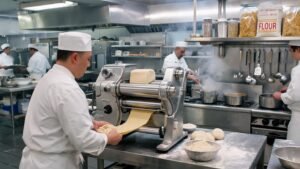
Automation & Labor: Professional units often feature independent mixing hoppers and extrusion chambers. This allows operators to mix a fresh batch of dough while the previous batch is actively extruding, saving hours of manual labor.
Run Time & Longevity: Residential units rely on small plastic or nylon gears that can strip under heavy semolina dough pressures. Commercial extruders use solid steel components and oil-bath gearboxes designed to run all day without structural wear.
Production Capacity Timeline
To scale your pasta production efficiently, plan your equipment upgrades alongside your business milestones:
🏠 Home Kitchen
0.5kg / batch
───────────────
↓
☕ Boutique Café
5–10kg / hour
───────────────
↓
🍝 Restaurant
15–50kg / hour
───────────────
↓
🏭 Industrial Factory
100–500kg+ / hour
Frequently Asked Questions
What is the best pasta extruder for home kitchen use?
For most home kitchens, the Philips Pasta Maker Plus is the best choice because of its fully automated mixing, consistent extrusion, and incredibly easy cleaning process.
Is an electric pasta extruder worth buying?
Yes. If you enjoy short, hollow, or textured shapes like penne, rigatoni, and fusilli, an electric extruder is the only home or commercial machine that can physically make them.
Can pasta extruders make spaghetti?
Absolutely. By placing a round-hole spaghetti die plate on the front of your extruder, you can continuously extrude uniform strands of spaghetti to any length.
Which pasta extruder is easiest to clean?
Home models with dishwasher-safe components are the easiest to clean. For commercial settings, machines with tool-free, rapid-disassembly front plates are highly recommended to save valuable back-of-house cleanup time.
What pasta extruder do professional chefs use?
Professional chefs typically use Italian-made, heavy countertop or floor-standing extruders fitted with traditional bronze dies to create high-texture, sauce-gripping fresh pasta.
Can I start a pasta business with a home pasta extruder?
It is very difficult. Home machines are not designed for continuous operation and will overheat under heavy daily workloads, and their low output speed makes scaling retail or wholesale margins nearly impossible.
Can I make gluten-free pasta with a pasta extruder?
Yes, but gluten-free dough requires precise hydration and temperature control. You will need a machine with a powerful auger to handle the denser, starch-based doughs without clogging.
Why do professional chefs prefer bronze dies?
Bronze dies leave a rough, porous, and matte texture on the surface of the pasta. This rough finish allows sauces to cling to the noodles instead of sliding off, dramatically improving the dining experience.
How much pasta can a home extruder produce?
Most residential units produce roughly 0.5 to 1 kilogram of fresh pasta per hour, which is perfect for family-sized meals.
When should I upgrade to a commercial pasta extruder?
You should upgrade as soon as your daily production needs exceed 5 kilograms, or when manual prep labor begins to negatively affect your business margins.
Conclusion & Beyond: Scaling Your Food Processing Business
Finding the perfect machinery comes down to matching your daily production targets with the right engineering. For home kitchens, prioritizing ease of cleaning and counter space will keep your pasta-making fun and consistent. For professional settings, upgrading to a commercial-grade extruder ensures you can serve your clients with speed, precision, and reliable profit margins.
If you’re just starting, choose a quality home pasta extruder to master the basics. However, if you are serving hungry customers every day, a Small Commercial Pasta Machine will quickly pay for itself through higher output, better consistency, and lower labor costs.
Explore More Industrial Food Processing Solutions by Zhuoheng
At Zhuoheng, our expertise in extrusion technology goes far beyond tabletop pasta makers. We design and manufacture fully integrated, turn-key processing lines for food manufacturers and agricultural startups worldwide.
If you are looking to expand your factory’s product portfolio or enter high-margin food markets, explore our specialized commercial systems below:
1. High-Volume Pasta & Grain Production
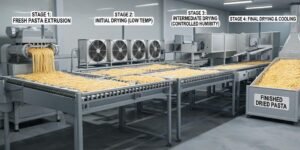
If your brand is ready to transition from fresh pasta to packaging dry, shelf-stable goods for supermarket distribution, you need continuous drying and automated processing:
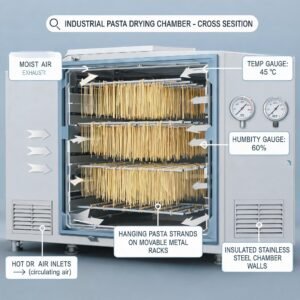
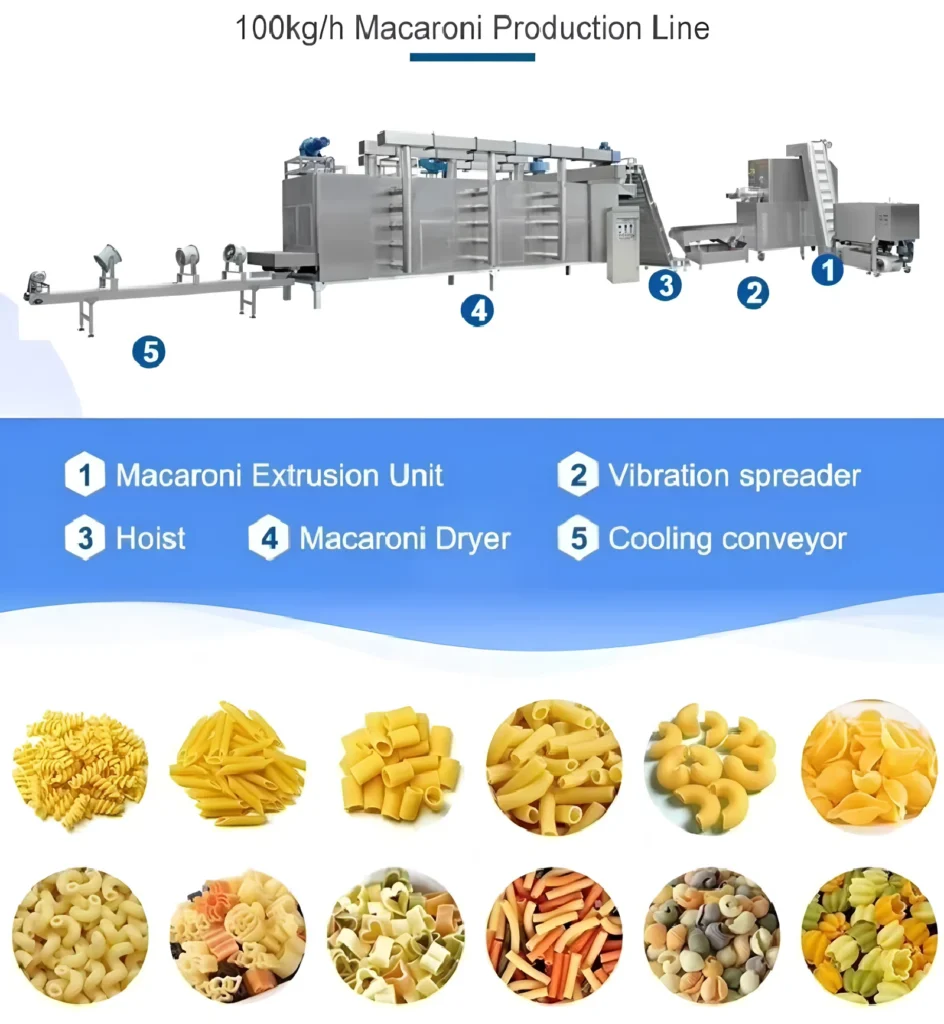
Pasta Macaroni Production Line: Fully automated mixing, vacuum extrusion, and multi-layer drying tunnels designed for premium, commercial-grade dry macaroni.
Breakfast Cereal Corn Flakes Food Production Line: A complete system for high-temperature cooking, twin-screw extrusion, flaking, and roasting to produce crispy breakfast cereals.
2. High-Margin Snack & Crisps Lines
Utilizing advanced twin-screw extrusion mechanics, these lines allow you to produce a vast range of shapes, textures, and flavor profiles with rapid recipe-changeover capabilities:
2D and 3D Snack Pellet Puffed Food Processing Line: Produce high-quality pellets (in shapes like hearts, rackets, or spirals) that can be stored and later fried or puffed.
Puffed Snack Food Production Line & Fried Snack Food Production Line: Continuous lines for directly expanded snacks, cheese curls, and fried dough products with integrated seasoning drums.
3. Advanced Food Tech & Ingredients
For specialized agricultural processors and plant-based protein manufacturers, we provide heavy-duty machinery to manufacture high-value food ingredients:
Textured Protein Production Line (TVP/TSP): Process soy or pea protein into high-quality plant-based meats with excellent fibrous texture.
Bread Crumbs Production Line: Skip traditional baking; extrude and grind consistent panko or standard bread crumbs continuously.
Modified Starch Production Line & Nutritional Powder Production Line: High-shear extrusion setups for pre-gelatinized starch, baby food powders, and instant nutritional drink mixes.
(We also specialize in high-capacity agricultural feeds. If you are looking to scale animal feed production, explore our commercial Pet Food Production Line and high-stability Fish Feed Production Line).
Let’s Engineer Your Next Growth Phase
Not sure which machine capacity or layout matches your facility’s square footage and power supply? Our engineering team is here to design a custom, turn-key solution tailored to your exact budget and production goals.
More Food Processing Line