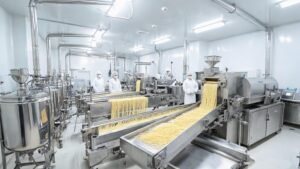
Let’s be honest: “Return on Investment” can feel like a dry, numbers-driven concept. But in the world of pasta manufacturing, it’s the difference between a business that thrives and one that merely survives. If you’re still running your operation on outdated equipment, you might be unknowingly hemorrhaging cash. Upgrading to a modern, industrial macaroni production line isn’t just about buying new toys; it’s a strategic move that directly impacts your bottom line.
Many manufacturers get trapped by a simple calculation: “My old machine is paid off, so it’s cheaper to run.” This is a dangerous fallacy. It ignores the hidden costs of downtime, waste, and inefficiency that plague older systems. This article will dissect the real-world ROI of upgrading your pasta manufacturing line, moving beyond the simple spreadsheet to uncover the significant financial gains that a wise investment can bring.
The Hidden Cost of “Old Reliable”
Before we talk about the benefits of a new line, we need to understand the true cost of the old one. If your current equipment is over ten years old, you are almost certainly losing money in ways you haven’t quantified.
The Downtime Drain
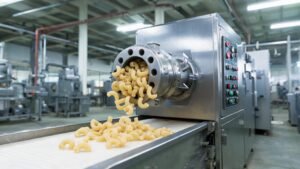
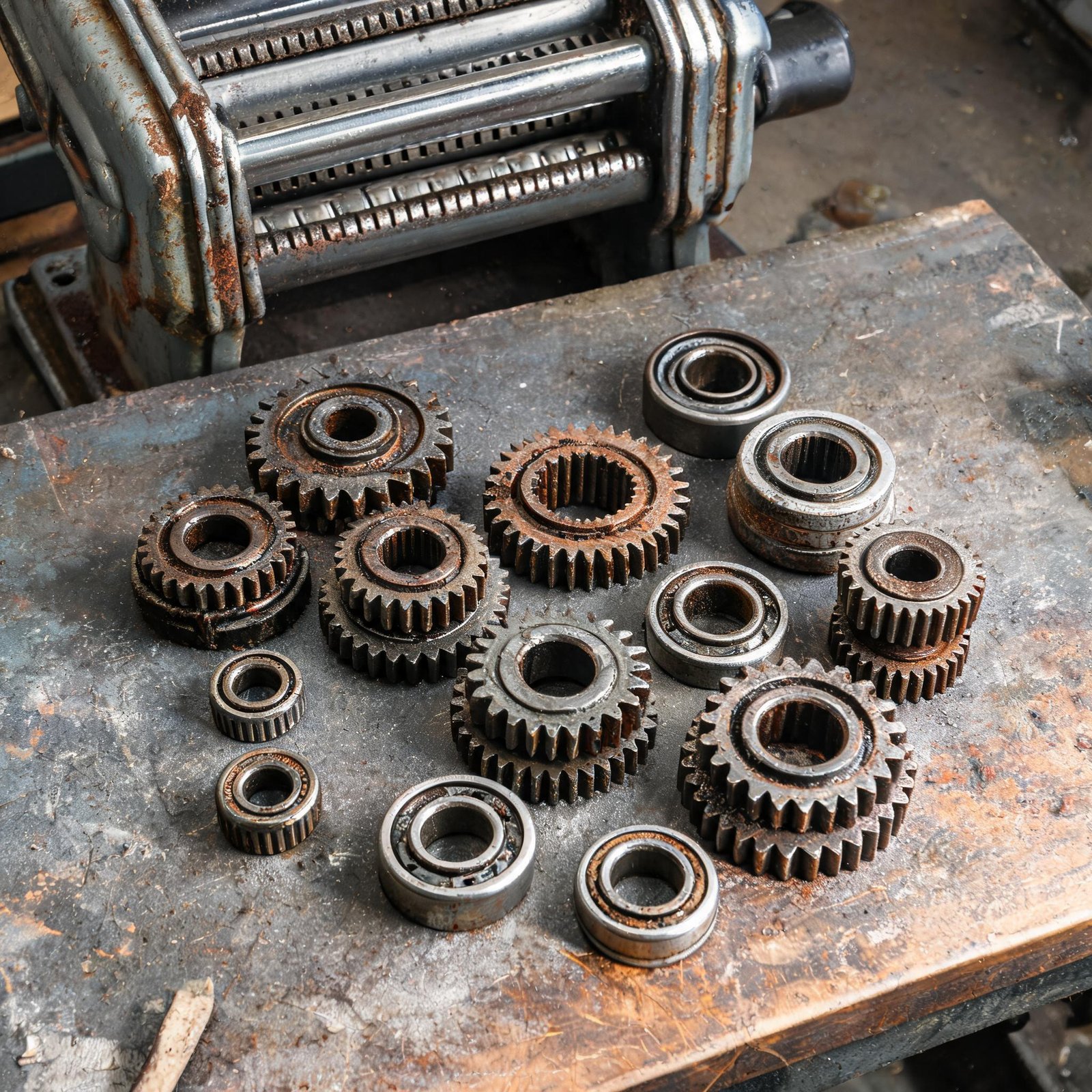
An older Macaroni Production Line is a ticking clock of mechanical failure. Every unplanned stoppage—a seized bearing, a worn-out seal, a jammed cutter—represents lost production time. But the real cost isn’t just the lost output. It’s the idle labor, the rush delivery charges for a small part, and the frantic phone calls to find a technician who knows how to fix a 20-year-old machine. For a typical facility, unplanned downtime can cost more than $5,000 per hour. If your old line breaks down for just one extra day a month, you are losing over $60,000 a year. That’s before you even calculate the cost of the wasted raw dough.
Maintenance: The Invisible Budget Eater
Old machinery requires frequent, high-cost maintenance. You aren’t just paying for a replacement part; you’re paying for the specialist labor to install it, the premium for parts that are no longer in mass production, and the overtime for your maintenance crew. A modern line, on the other hand, is designed for reliability. Consider the difference in spare parts inventory. An older extruder might require you to keep a small warehouse of belts, gaskets, and motors on hand. A new system built by Zhuohengextruder, however, uses standardized, high-durability components that are easy to source and replace, dramatically slashing your annual maintenance budget.
Getting Your Pasta Production Line ROI Calculation Right
The article “Refining ROI Calculation for End-of-Line Automation” highlights a critical truth: most ROI forecasts are wildly optimistic. They often ignore three major cost centers that can kill your expected payback period. Let’s fix that by looking at a real-world calculation for a pasta production line ROI calculation.
Many business owners calculate the ROI of a new line like this:
- Investment: $500,000 (for a new, automated macaroni line)
- Labor Savings: You replace 5 operators per shift. Hourly wage: $15. Shifts per year: 2. (5 operators * 2 shifts * 8 hours * $15 * 300 working days ≈ $360,000 saved per year).
- Simple ROI: $500,000 / $360,000 = 1.4 years.
This looks fantastic! But is it accurate? Let’s follow the lesson from the research paper and add in the real costs.
How to Calculate the Real ROI
Here’s the accurate formula you should use for your industrial macaroni machine investment return:
Annual Savings = (Labor Savings) – (New Energy Costs) – (Ramp-up & Training Costs) – (Increased Maintenance) – (Unplanned Downtime)
Let’s build on our example, but honestly.
- Energy Costs: A new, high-efficiency ZhuoHeng extruder uses advanced servo motors and optimized thermal jackets. Its running electrical load is notably lower than older hydraulic or direct-drive machines. However, it’s still a significant consumer. Let’s say it uses 30% less energy than your old one. In a region with moderate electricity costs ($0.15/kWh), you might save $20,000 per year compared to your old machine.
- Training & Ramp-up: You can’t just plug in a new line on a Friday and run at 100% on Monday. Expect a performance dip. For the first two months, your team will be learning. This might cost you $30,000 in reduced output and increased waste. This cost should be amortized over the first year.
- New Maintenance, Not Zero Maintenance: A modern line has sophisticated components. While less frequent than on an old line, planned maintenance still costs money. Budget for a technician, calibrated tools, and a base set of wear parts (new conveyor belts, sensor calibrations, etc.). This might be $15,000 per year.
- Unplanned Downtime: Even a great machine has issues. Let’s be honest and budget for 1% unplanned downtime in the first year. At a 1,000 kg/hr production rate and a $1/kg product value, this is a hidden cost of $87,600 per year (1% * 24 hrs * 365 days * 1000kg * $1).
The Real ROI Calculation:
- Labor Savings: $360,000
- Energy Savings: + $20,000
- Ramp-up Costs: – $30,000
- New Maintenance: – $15,000
- Realistic Downtime: – $87,600
Net Annual Savings = $247,400
Real ROI = $500,000 / $247,400 = 2.02 years.
This is still an excellent ROI! And it becomes even more favorable in the second year when ramp-up costs disappear and your team becomes fully proficient. A realistic calculation ensures your board of directors and your finance team will be happy. Avoid the “magical” 1-year ROI and present a solid, defensible number like this.

Key Factors That Drive Higher ROI in a Modern Line
So, what exactly about upgrading to a new system makes the numbers work so much better? It’s about moving from reactive problem-solving to proactive, efficient production.
1. Precision Engineering Reduces Waste
The most significant benefit of upgrading your pasta manufacturing line is precision. An old extruder might have worn screws that create friction, inconsistent temperature zones, and a die system that produces irregular shapes. This leads to a high scrap rate. Some old lines have a 5-8% waste rate on a long run.
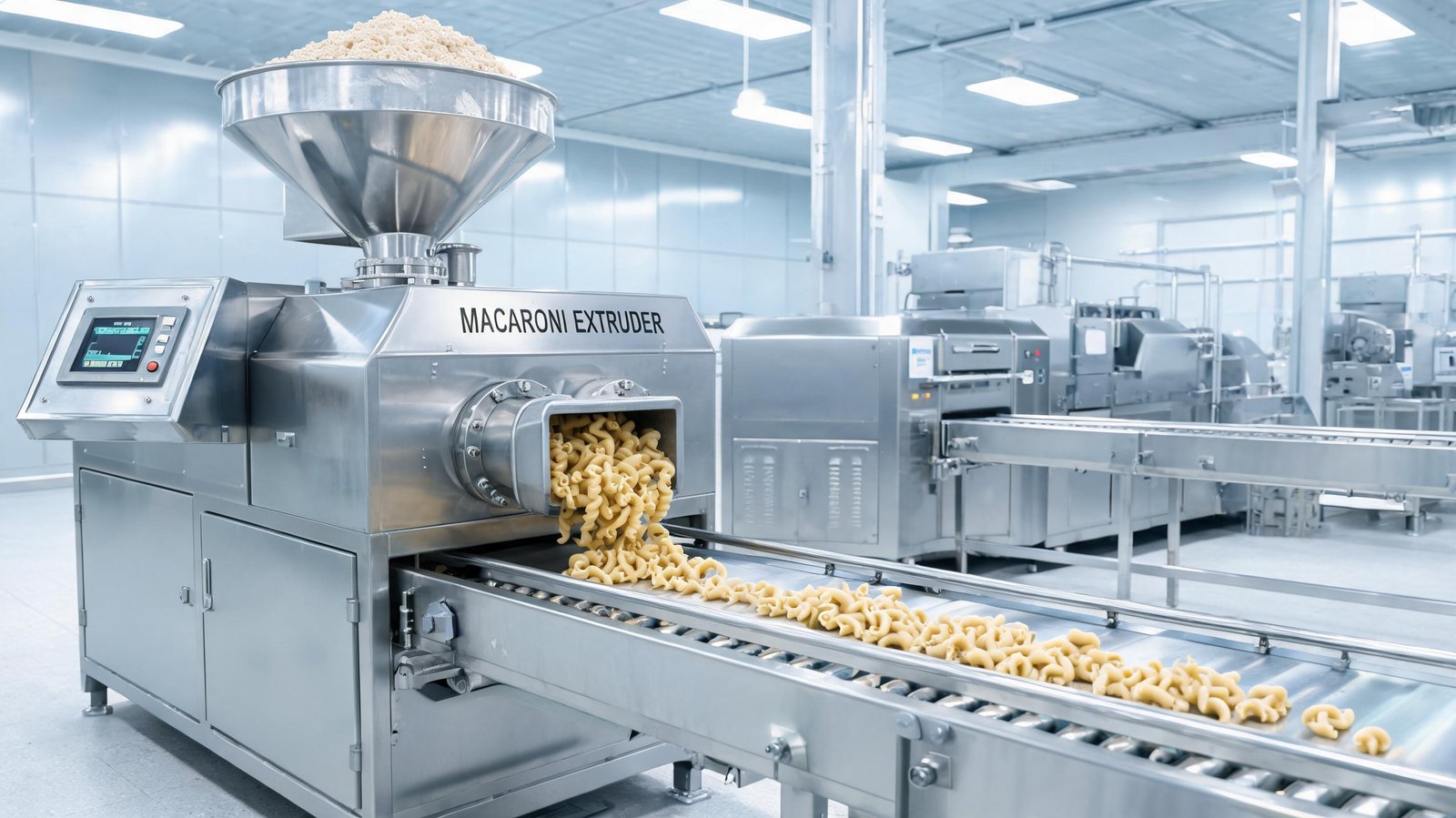
A modern twin-screw or single-screw extruder from a leader like ZhuoHeng utilizes advanced PLC controls. Every temperature zone is precise within 1°C. The screw speed is perfectly matched to the dough hydration. This reduces waste to under 1% in most cases. If you process 10,000 tons of pasta a year, reducing waste from 5% to 1% saves you a staggering 400 tons of raw material per year. That’s pure profit.
2. The Crucial Role of Automation
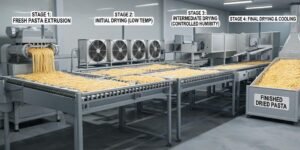
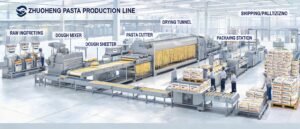
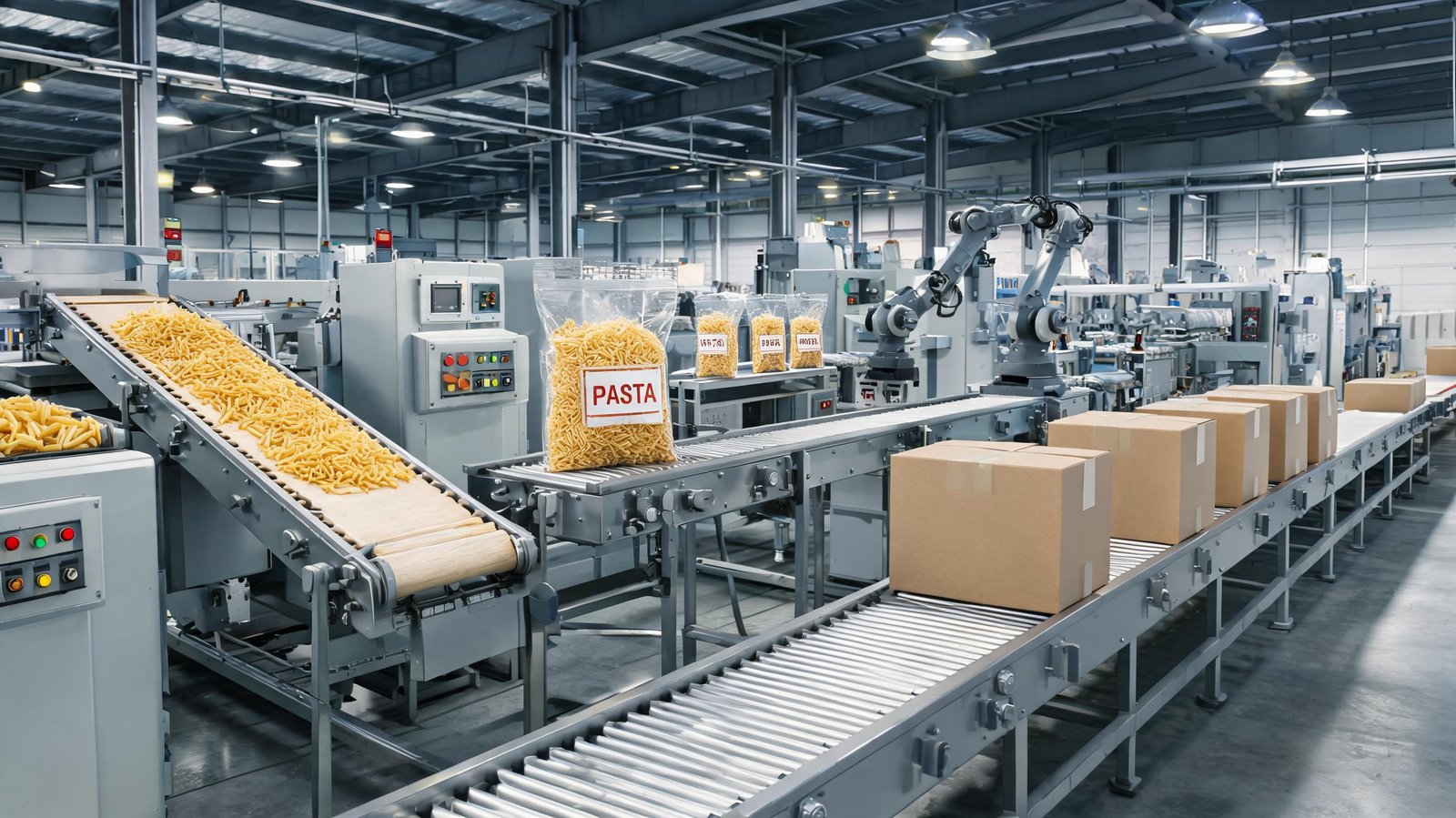
Automation is no longer a luxury; it’s a necessity for competitive ROI. A modern line isn’t just an extruder; it’s a fully integrated system. From the automatic mixer that knows exactly how much water to add based on ambient humidity, to the auto-feeding press that maintains a consistent hopper level, to the advanced drying chamber that adjusts parameters based on the pasta’s moisture content in real-time.
This level of Industrial Food Machinery automation does more than save labor. It improves quality consistency. The first batch of the day is identical to the last, which is crucial for private-label contracts. It also allows for lights-out manufacturing where a skeleton crew can oversee multiple lines, generating value even during off-peak hours. The money isn’t saved from firing workers; it’s saved from leveraging the time of your skilled workers for tasks that require human judgment, like quality assurance and process optimization.
Benefits of Upgrading Your Pasta Manufacturing Line: The Complete Picture
While ROI is the headline, the supporting cast of benefits makes the investment truly bulletproof.
- Product Quality & Brand Reputation: A modern line produces pasta with a better “tooth” (al dente texture) because the extrusion and drying process is precisely controlled. This leads to happier customers, fewer returns, and a premium brand image. Consistent, high-quality output is the best marketing tool you have.
- Energy Efficiency & Sustainability: As your energy costs continue to rise globally, a high-efficiency line becomes a major asset. Modern thermal drying chambers recapture and cycle heat. High-efficiency motors (IE4 or IE5) draw significantly less power. This isn’t just good for the planet; it builds resilience into your operating costs. It’s a key KPI for any serious pasta production line ROI calculation.
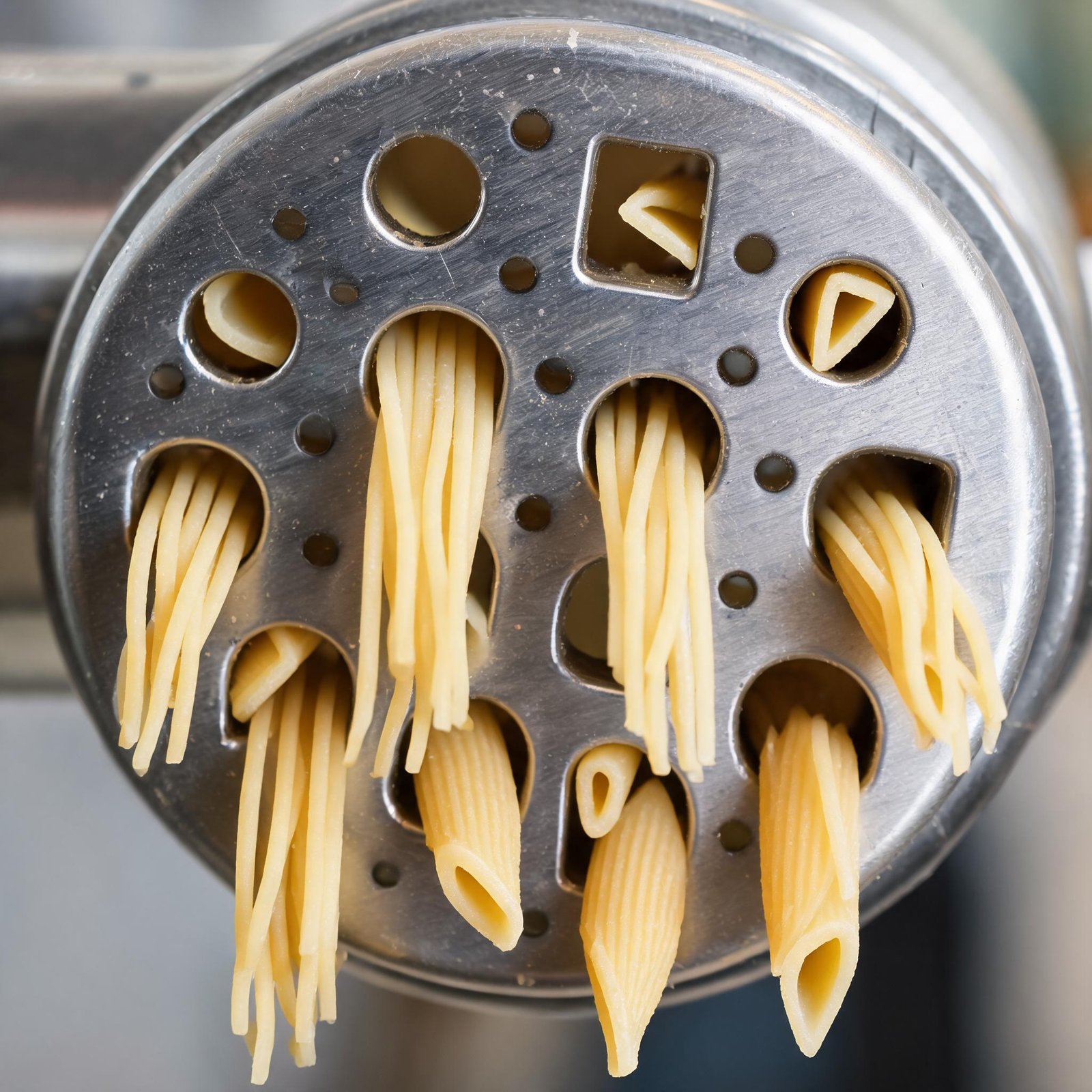
- Flexibility & Market Responsiveness: Old lines are often “locked in” to one or two shapes. Changing a die is a half-day job. A modern ZhuoHeng machine features quick-change die systems. You can switch from penne to fusilli in under 30 minutes. This allows you to react to market trends, run smaller, high-margin batches of artisan shapes, and fill custom orders your competitors can’t touch. This flexibility is what separates a commodity producer from a valued partner.
- Worker Safety & Morale: Let’s not forget your team. Old equipment is often dangerous, lacking proper guarding or with hot surfaces exposed. A modern line is designed with safety in mind: interlocks, light curtains, and ergonomic loading heights. A safer work environment leads to lower insurance premiums, fewer lost-time accidents, and a more motivated, loyal workforce.
Why You Should Remember the Heat
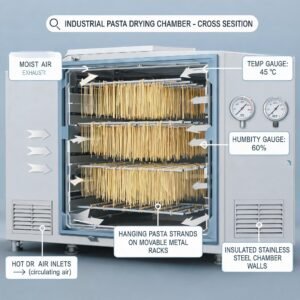
One of the most overlooked factors in upgrading is the thermal management system. The drying process is the most energy-intensive and critical part of the line. Many manufacturers retrofit a new extruder onto an old, inefficient dryer. This is a mistake. You are capping your potential ROI.
The best benefits of upgrading pasta manufacturing line come from a holistic system approach. A modern drying tower or belt dryer uses multi-zone humidity and temperature control. This eliminates the “case hardening” problem (where the outside is dry but the inside is wet) which leads to breakage and poor shelf life. The result is a stronger, more durable final product that is less likely to crack in the bag, reducing field returns and protecting your brand’s reputation.
The Verdict: Is an Upgrade Worth It for Your Business?
For the vast majority of mid-to-high volume pasta producers, the answer is a resounding “yes.” The key is to be honest and thorough in your industrial macaroni machine investment return calculation.
Don’t just look at the sticker price. Look at the total cost of ownership (TCO) over 10 years. Include energy, maintenance, waste, labor, and the cost of lost sales from downtime. A 2-year ROI on a machine that will last 15+ years is a phenomenal investment. It transforms your business from a cost center into a profit center.
If you are still relying on equipment that’s more than a decade old, you are subsidizing your competitors’ growth with your own waste and inefficiency. A new line from Zhuohengextruder isn’t an expense; it’s a strategic asset.
Frequently Asked Questions
To help you build a complete case for this decision, here are answers to some common questions.
How long is the typical payback period for a new macaroni production line?
For most processors, a realistic payback period, including the hidden costs discussed here, ranges from 1.5 to 3 years. A well-planned project with high existing demand can pay back in well under two years. The key is to focus on line speed and waste reduction.
My current line is running. Why should I disrupt production for an upgrade?
This is a valid concern. The best strategy is a phased approach or a parallel installation. Many companies buy a new, smaller line to handle a specific product line or test market. Once it proves its efficiency, they decommission the oldest and least reliable line. The installation downtime can be managed by working with a supplier like ZhuoHeng that provides turnkey project management, including a detailed installation schedule to minimize your disruption.
How do I know if my facility is a good candidate for a full upgrade?
You are a fantastic candidate if your current line runs at less than 75% OEE (Overall Equipment Effectiveness), you have a scrap rate over 3%, your labor costs per kilogram are trending up, or you are losing sales due to inconsistent quality. A professional audit of your current line will answer this definitively.
What are the most important features to look for in a modern line?
Look for a PLC-based control system with remote monitoring capabilities, energy-efficient servo drives, a quick-change die system for flexibility, and a sophisticated multi-zone drying system. The quality of the extruder screws and the sealing system are also non-negotiable points of quality.
How does the quality of the supplier impact my ROI?
It is the single biggest factor. A machine that is poorly built will negate all your ROI calculations. You need a partner with a proven track record, robust after-sales support, and a willingness to help with commissioning and training. A reliable supplier provides the peace of mind that your investment will yield its promised return.
Conclusion: Your Next Step to Higher Profits
Upgrading your Pasta Macaroni Production Line is a decision that impacts your company for a decade or more. The data is clear: the hidden costs of old equipment are a silent drain on your profitability. By adopting a methodical approach to your ROI calculation—one that accounts for labor, energy, maintenance, and realistic downtime—you can build a business case that’s undeniable.
A modern line delivers more than just increased throughput. It delivers higher quality, lower waste, greater energy efficiency, and a safer work environment. It enables you to be more flexible and responsive to the market. In short, it makes your entire business more valuable.
Stop running a business that is built on making do. Start building a business that is built for the future. The ROI of efficiency is real, and it starts with the right equipment. To explore what a custom solution could look like for your plant, begin your journey by having an open conversation with an experienced partner about your specific needs and production goals. The numbers will speak for themselves.