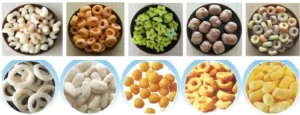
The global snack market is currently witnessing a tectonic shift. For decades, the “puff” category was synonymous with corn—specifically, high-sodium, orange-dusted corn curls that offered high palatability but negligible nutritional value. However, as we move toward the middle of this decade, the narrative is changing. Driven by a more informed, health-conscious consumer base, the industry is pivoting toward “Functional Snacking.”
For food processing enterprises and global buyers, this isn’t just a trend—it’s a fundamental restructuring of the supply chain and production technology. Transitioning from simple corn-based recipes to complex, nutrient-dense ingredients like quinoa, lentils, and chickpeas requires more than just a change in raw materials. It requires a sophisticated Puffed Food Machine capable of managing the intricate thermomechanical transformations that these “superfoods” demand. At zhuoheng, we have spent years engineering these transitions, ensuring that our clients can meet the surging demand for quinoa snacks without compromising on texture, shelf-life, or production efficiency.
The Evolution of the Healthy Snack Market
To stay competitive in the international trade arena, one must first understand the “Why” behind the “What.” The decline of traditional corn puffs in premium market segments is not due to a lack of flavor, but a lack of substance. Today’s consumers—particularly in North America, Europe, and parts of Asia—are looking for “Clean Label” products. They want short ingredient lists, recognizable grains, and functional benefits like high protein and fiber.
The Rise of Quinoa and Pulses
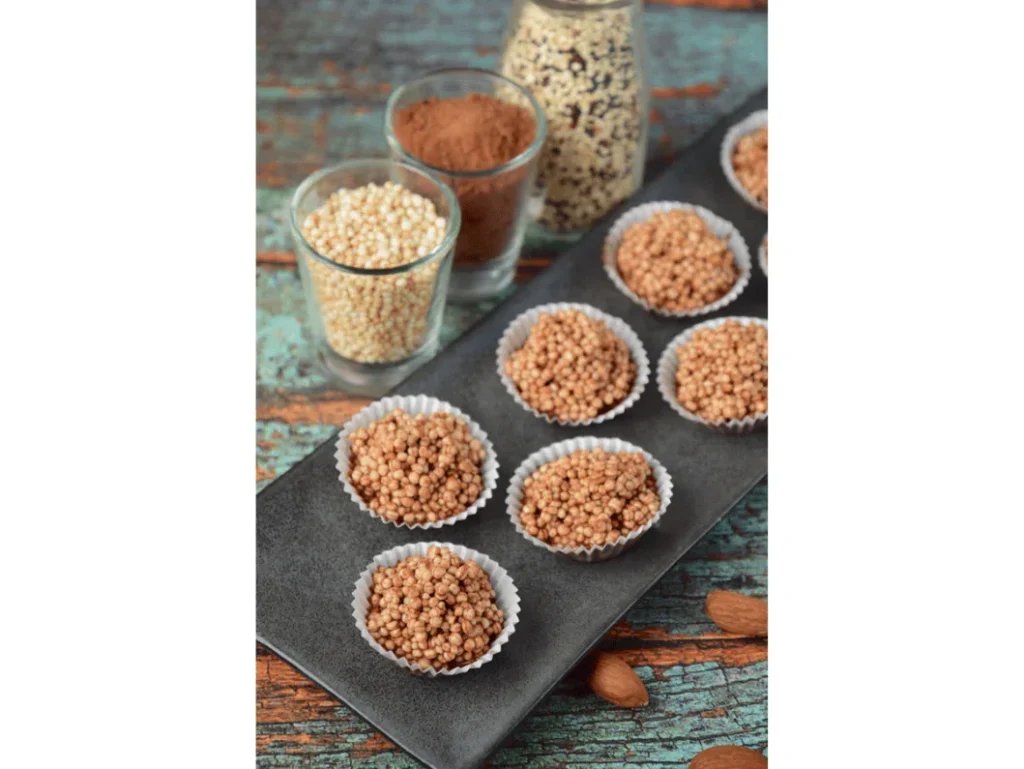
Quinoa is often cited as the “gold standard” of the healthy snack revolution. As a pseudo-cereal, it is a complete protein, containing all nine essential amino acids. This makes quinoa snacks a powerful marketing tool for any food brand. However, from a manufacturing perspective, quinoa is a “difficult” ingredient. Unlike corn, which is high in starch and relatively easy to expand, quinoa has a higher lipid and fiber content. These components act as “bubble breakers” during the expansion process, often resulting in a dense, hard product if not processed with a precision Snack Puffing Machine.
Lentils and chickpeas (pulses) follow a similar logic. They offer a fantastic “earthy” flavor and are packed with plant-based iron and folate. The challenge for the factory lies in achieving that iconic “melt-in-the-mouth” crunch while maintaining the integrity of these delicate nutrients. This is where quinoa puffed snack production becomes a science of precision engineering.
Market Drivers for 2026 and Beyond
As we analyze healthy puffed snack machine trends 2026, it is clear that “transparency” is the new currency. Processing plants are no longer just looking for “a machine”; they are looking for a partner like zhuoheng who understands the global regulatory environment. Buyers are looking for equipment that can handle:
Gluten-Free Certification: Ensuring zero cross-contamination and easy cleaning.
Low-Acrylamide Processing: Controlling temperatures to prevent the formation of harmful compounds during high-heat extrusion.
Non-GMO and Organic Compatibility: Handling delicate organic flours without degrading their quality.
The shift toward healthy ingredients is a permanent relocation of the industry’s center of gravity. For a processing enterprise, the choice is simple: adapt with high-performance technology or lose market share to the innovators. By leveraging a state-of-the-art Puffed Food Machine, you aren’t just making snacks; you are future-proofing your business.


The Science of Extrusion – Engineering the Perfect Puff
To the untrained eye, a Puffed Food Machine might look like a simple piece of industrial hardware. However, for a food scientist or a production manager at zhuoheng, it is a highly calibrated pressurized vessel where complex biochemical reactions occur in milliseconds. When we transition from corn to quinoa snacks, we are essentially changing the “fuel” of the machine, which necessitates a deeper understanding of Extrusion Cooking Technology (ECT).
The Thermomechanical Transformation
In quinoa puffed snack production, the raw flour undergoes a process known as “Glass Transition.” Inside the barrel of the Puffed Snack Machine, the material is subjected to three primary forces: thermal energy (heat), mechanical energy (shear), and moisture.
Starch Gelatinization: Unlike corn, which has a very predictable starch behavior, quinoa starch granules are much smaller. They require a specific “onset temperature” to burst and form the polymer melt. If the temperature profile within the Snack Puffing Machine is too low, the starch won’t gelatinize, leading to a “raw” taste and a gritty texture.
Protein Denaturation and Cross-linking: This is where quinoa snacks become tricky. Quinoa is rich in globulins and albumins. Under the high-shear environment of the extruder, these proteins uncoil and form a new structural matrix. This matrix is what holds the air bubbles. If the shear is too aggressive, you “over-shear” the proteins, and the snack collapses upon exiting the die.
The Flash Evaporation Phase: As the dough exits the die, the internal pressure drops from perhaps 100 bar to 1 bar (atmospheric pressure) instantly. The superheated water inside the dough turns to steam, creating the cellular structure we recognize as a “puff.” Because of the high fiber content in quinoa and lentils, these steam bubbles are prone to popping prematurely.
Precision Parameter Control
For a processing enterprise, “consistency” is the metric that determines profitability. A high-quality Puffed Snack Machine must offer granular control over several variables:
SME (Specific Mechanical Energy): This is the amount of energy the motor delivers to every kilogram of quinoa flour. We calibrate our zhuoheng machines to maintain a stable SME even as the moisture content of the raw grain fluctuates.
Residence Time Distribution (RTD): How long the quinoa stays inside the “hot zone” matters. Too long, and you get “maillard browning” (burnt flavors); too short, and the product is undercooked.
By mastering these scientific principles, zhuoheng ensures that your quinoa puffed snack production line delivers a product that is not only healthy but also possesses a superior “mouthfeel”—the elusive quality that keeps consumers coming back for more.


Twin-Screw Technology – The Industry Standard for 2026
If the science is the “why,” then the twin-screw extruder is the “how.” In the realm of healthy puffed snack machine trends 2026, the single-screw extruder is rapidly becoming obsolete for high-end applications. To handle the fibrous, high-protein nature of quinoa snacks, a twin-screw system is non-negotiable.
Why Twin-Screw for Superfoods?
The primary advantage of the zhuoheng twin-screw Snack Puffing Machine is its “Positive Displacement” capability. In a single-screw machine, the material often slips against the barrel wall, leading to uneven cooking. In a twin-screw system, the intermeshing screws act like a pump, forcing the material forward regardless of its viscosity or stickiness.
Handling High-Fiber Ingredients: Lentils and quinoa are abrasive and sticky. Our twin-screw Puffed Snack Machine utilizes modular screw elements. This means we can “build” a screw specifically for your recipe—adding kneading blocks where more mixing is needed and reverse elements where more pressure is required.
Self-Cleaning Dynamics: High-protein materials tend to bake onto the screw surface during downtime. The “wiping” action of our twin screws ensures that the barrel remains clean, reducing waste during start-up and shutdown.
Thermal Accuracy: Our barrels are divided into multiple heating and cooling zones. For quinoa puffed snack production, we might keep the feeding zone cool to prevent premature clumping, while the final “cooking zone” is boosted to exactly 160°C to ensure maximum expansion.
Engineering for Durability
At zhuoheng, we understand that for a factory, downtime is the enemy. Our Puffed Snack Machine gearboxes are engineered for high-torque applications. When you are pushing a dense lentil-based dough through a small die, the back-pressure is immense. Our thrust bearings and lubrication systems are designed to handle 24/7 production cycles, ensuring that your quinoa puffed snack production never skips a beat.
By choosing a twin-screw Puffed Food Machine, you are investing in versatility. Today you may produce quinoa puffs; tomorrow, with a simple change of the screw profile and die, you could be producing high-protein lentil chips or even textured vegetable protein (TVP) meat analogues.
The Industrial Workflow – A Symphony of Automation
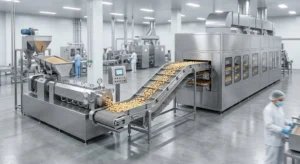
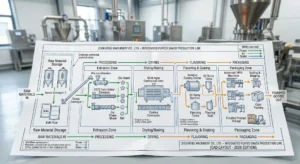
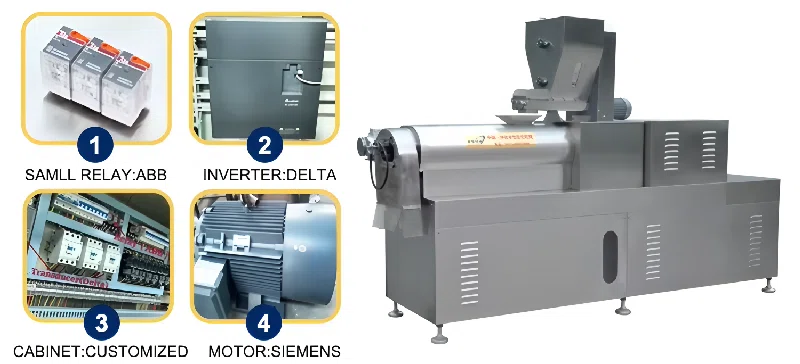
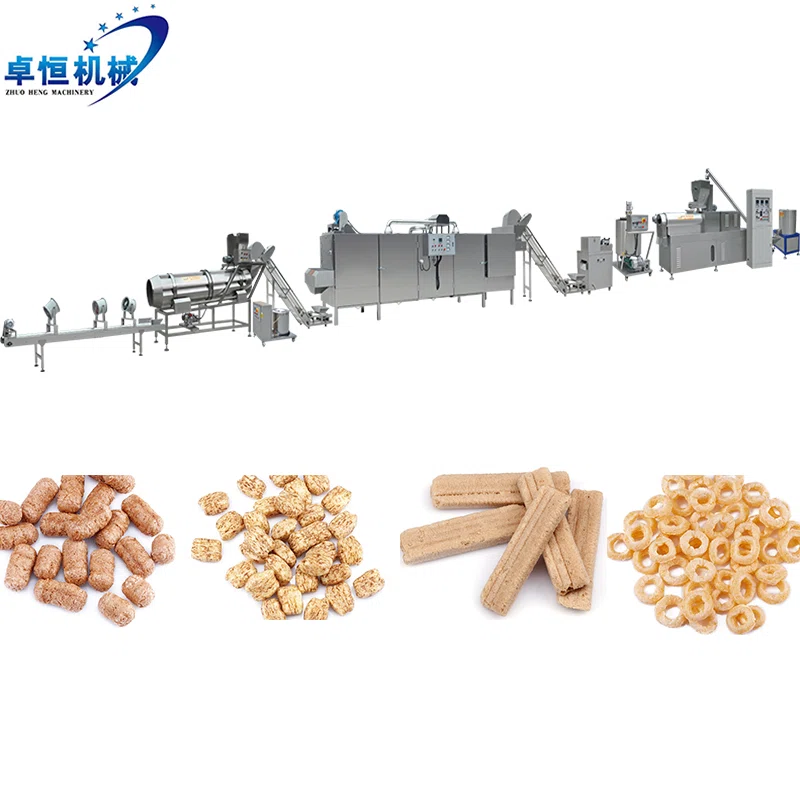
For a factory manager, the Puffed Food Machine is the heart of the operation, but the body consists of several critical organs that must work in perfect synchronization. To achieve a high-yield quinoa puffed snack production, every stage—from the raw grain silo to the final nitrogen-flushed bag—must be optimized for the specific physical properties of superfoods.
Step 1: Raw Material Preparation and Micro-Dosing
The secret to premium quinoa snacks starts in the mixer. Quinoa and lentil flours are often blended with small amounts of corn or rice flour to provide the necessary starch “backbone.”
Precision Mixing: zhuoheng systems utilize high-speed ribbon blenders that ensure a CV (Coefficient of Variation) of less than 5%. This is vital when adding functional ingredients like spirulina, kale powder, or pea protein.
Volumetric Feeding: Our Snack Puffing Machine is equipped with twin-screw volumetric feeders. These feeders prevent “bridging” (when flour gets stuck in the hopper), a common issue with the oily, high-protein flours used in healthy snack recipes.
Step 2: The Pre-Conditioning Phase
Before the flour hits the extruder screws, it enters the Pre-conditioner. This is a critical step for healthy puffed snack machine trends 2026. By injecting steam and water into the flour while it is being agitated, we “pre-hydrate” the quinoa fibers.
Fiber Softening: Softened fibers are less likely to tear the air bubbles during expansion.
Thermal Pre-treatment: Pre-conditioning starts the gelatinization process early, reducing the mechanical strain on the Puffed Snack Machine and increasing the overall throughput by up to 20%.
Step 3: Extrusion and Cutting
As discussed, this is where the thermomechanical magic happens. In quinoa puffed snack production, the “Cut-at-Die” system is paramount. Since quinoa dough is more elastic than corn dough, we use high-speed rotary cutters with frequency-controlled blades. This allows the operator to adjust the length of the snack—from tiny “puffs” to long “tubes”—on the fly without stopping the line.
Step 4: Multi-Stage Convective Drying
Healthy snacks are often marketed as “baked, not fried.” To achieve that crispiness without oil, the dryer must be world-class.
Moisture Migration: Our dryers use a multi-layer conveyor system. The top layer uses higher temperatures to remove surface moisture, while the lower layers use lower temperatures and higher airflow to pull moisture from the center of the puff.
Energy Recovery: Modern zhuoheng dryers are designed with heat-exchange technology, recycling the hot exhaust air to reduce energy consumption—a key factor in healthy puffed snack machine trends 2026.
Step 5: Advanced Seasoning and Flavor Application
For quinoa snacks, the seasoning must be light and even. We offer two solutions:
Rotary Drum Coating: Ideal for oil-based slurries.
Electrostatic Powder Spraying: This is the “gold standard” for healthy snacks. It uses an electric charge to bond spices directly to the dry puff, requiring 50% less oil while providing 100% coverage.
(Source:https://pmc.ncbi.nlm.nih.gov/articles/PMC9658072/)
Quality Control, ROI, and the Business Case for Healthy Extrusion
When an international buyer looks at a Puffed Food Machine from zhuoheng, they aren’t just looking at a price tag; they are looking at an ROI (Return on Investment) calculation. In the B2B world, quality control is the foundation of brand loyalty.
Key Performance Indicators (KPIs) in Production
To maintain the quality of your quinoa snacks, your production team must monitor three specific metrics:
Expansion Ratio: How many times the product grows compared to the die size. Our Puffed Snack Machine provides the stability needed to keep this ratio within a 2% variance.
Bulk Density: This determines how many snacks fit into a bag. If the density varies, your automated packaging machines will either overfill or underfill the bags, leading to significant waste.
WAI (Water Absorption Index): For snacks that might be used in cereal or yogurt, the WAI tells us how long the crunch lasts when exposed to moisture.
Calculating the Total Cost of Ownership (TCO)
A cheaper Snack Puffing Machine often hides costs in energy waste and frequent part replacements. zhuoheng focuses on:
Wear-Resistant Alloys: Our screws are made from high-chrome, high-vanadium steels that last 3-4 times longer than standard carbon steel when processing abrasive grains like quinoa.
Energy Efficiency: By optimizing the motor-to-gearbox ratio, our machines consume significantly less KWh per ton of finished product.
The “Zhuoheng” Partnership
Choosing the right Puffed Food Machine is a strategic decision. As a factory specialized in customized production lines, we provide our clients with more than just steel and motors. We provide:
Recipe Development: We work with your food scientists to perfect the quinoa puffed snack production parameters.
Global Compliance: Our machines meet CE, UL, and ISO standards, ensuring smooth customs clearance for our international clients.
After-Sales Intelligence: With remote diagnostic capabilities, our engineers can assist your team in real-time, no matter where your factory is located.
As we look toward healthy puffed snack machine trends 2026, the focus is clear: intelligence, efficiency, and health. At zhuoheng, we are ready to help you lead that charge.

Troubleshooting and Formulation Optimization for Healthy Grains
To reach a truly global standard in quinoa puffed snack production, a factory must be prepared to troubleshoot the unique physical challenges that come with “non-corn” ingredients. Because quinoa, lentils, and chickpeas contain different ratios of amylose and amylopectin (the two components of starch), the behavior of the melt inside the Puffed Snack Machine can vary wildly between batches.
Dealing with the “Fiber Effect”
High-fiber ingredients like whole-grain quinoa or red lentils tend to “puncture” the air cells in the puff before they can solidify. This leads to a product that is crunchy on the outside but dense or “raw” in the center.
The zhuoheng Solution: We recommend a specific “Shear-Thinning” screw profile. By increasing the mechanical energy in the middle of the barrel, we break down the fiber particles into a smaller micron size, allowing them to integrate into the starch matrix without compromising the expansion.
Managing Saponins and Flavor Profiles
Quinoa contains natural compounds called saponins, which can leave a bitter aftertaste if the grain isn’t washed or processed correctly.
Thermal Debittering: Our Snack Puffing Machine can be tuned to a specific “Flash Heat” profile. The high temperature inside the barrel, combined with the rapid pressure drop, helps to volatilize certain bitter compounds, resulting in a cleaner, nuttier flavor profile for your quinoa snacks.
The “Sticking” Problem
Because healthy ingredients often have higher protein and sugar content, they can become extremely sticky at high temperatures. This leads to “clogged dies”—a nightmare for any 24/7 production line.
Die Surface Engineering: At zhuoheng, our dies are coated with specialized non-stick food-grade alloys. Combined with our high-speed rotary cutting system, this ensures that even the stickiest quinoa snacks release cleanly, maintaining the perfect shape and reducing waste.
Strategic Conclusion – Partnering for the Future of Food
The transition from corn-based snacks to superfood-based nutrition is not a passing fad; it is the new baseline for the global food industry. For any processing enterprise, the move toward quinoa puffed snack production is a declaration of quality and a commitment to the consumer’s well-being.
As we have explored in this guide, the success of this transition depends on the harmony between material science and mechanical engineering. A standard Snack Puffing Machine may produce a puff, but it takes a zhuoheng engineered Puffed Snack Machine to produce a masterpiece of texture, nutrition, and profitability.
By staying ahead of healthy puffed snack machine trends 2026—focusing on automation, energy efficiency, and formulation flexibility—you are positioning your factory at the very top of the global value chain. Whether you are targeting the premium markets of North America or the emerging health-conscious middle class in Southeast Asia, the right technology is your most powerful asset.
At zhuoheng, we don’t just build machines; we build the future of food. We invite you to join us in this revolution, turning ancient grains into modern snacks that define the next decade of the industry.
Q&A: Your Technical Resource
To help you navigate the complexities of modern snack manufacturing in a single guide, we have compiled the most frequently asked questions from our global partners and processing plants.
-
1. What is the optimal moisture content for quinoa flour before it enters the Snack Puffing Machine?
For most quinoa puffed snack production lines, we recommend a pre-extrusion moisture level of 12% to 16%. If the moisture is too high (above 18%), the expansion will be poor and the product will be "chewy." If it's too low, the mechanical heat may burn the protein. Our automated pre-conditioners are designed to hit this "sweet spot" with 99% accuracy.
-
2. How does the protein content in lentils affect the wear and tear of the Puffed Snack Machine?
Legumes like lentils and chickpeas are more abrasive than corn. Over time, the high protein and fiber can cause "scouring" on the screw surface. This is why zhuoheng uses high-vanadium tool steel for our screws. While the initial investment is slightly higher, the TCO (Total Cost of Ownership) is much lower because you won't be replacing parts every few months.
-
3. We want to produce "Clean Label" snacks without artificial binders. We want to produce "Clean Label" snacks without artificial binders. Is this possible with your equipment?
Absolutely. One of the biggest healthy puffed snack machine trends 2026 is the elimination of binders like maltodextrin. Our twin-screw technology uses "Mechanical Gelatinization"—we use the physical pressure of the screws to bind the ingredients together. This allows you to produce quinoa snacks with just three or four ingredients: quinoa flour, a bit of rice flour for structure, water, and seasoning.
-
4. What is the expected output (kg/h) of a standard zhuoheng quinoa puffed snack production line?
We offer a range of sizes to fit different factory needs. Our mid-range Puffed Snack Machine typically produces between 200kg and 500kg per hour. For large-scale industrial operations, we provide "Mega-Lines" that can exceed 1,000kg per hour while maintaining the same level of precision and quality control.
-
5. How do we handle different shapes for the same quinoa recipe?
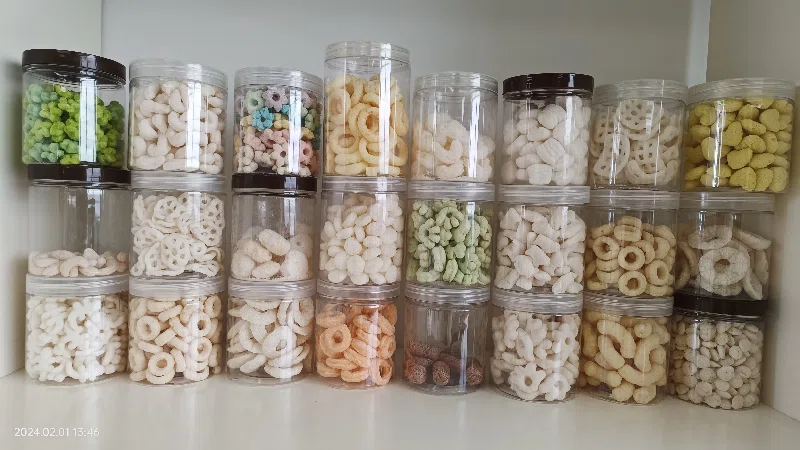
This is the beauty of the zhuoheng system. The die (the mold at the end of the machine) is interchangeable. You can switch from "Quinoa Rings" to "Lentil Stars" or "Chickpea Curls" in less than 30 minutes. This versatility allows you to test new market segments with the same Snack Puffing Machine without investing in entirely new production lines.
-
6. Does the Puffed Snack Machine support the addition of "Super-Ingredients" like Kale or Beetroot?
Yes. These are "heat-sensitive" ingredients. To prevent the loss of color and vitamins, we utilize a "Cool-End" extrusion technique where the final section of the barrel is kept at a lower temperature, just enough to expand the product without destroying the vibrant natural colors of the kale or beetroot. This is a core part of the healthy puffed snack machine trends 2026 that we are currently pioneering.
-
7. What kind of space/footprint is required for a complete production line?
A full-scale quinoa puffed snack production line—including mixing, extrusion, drying, seasoning, and cooling—typically requires a space of about 25 to 40 meters in length and 5 meters in width. However, at zhuoheng, we specialize in "U-shaped" or "L-shaped" configurations to fit your existing factory floor plan.
-
8. How long does it take for a new staff member to learn how to operate a zhuoheng Snack Puffing Machine?
Our systems are designed with a "Smart HMI" (Human-Machine Interface). Most of the complex pressure and temperature logic is handled by the PLC (Programmable Logic Controller). A typical operator can be fully trained in 3 to 5 days. We also provide comprehensive video manuals and 24/7 remote technical support.
If you are ready to explore how zhuoheng can transform your production capabilities, please reach out to our technical sales team for a custom proposal.