TL;DR (Key Takeaways)
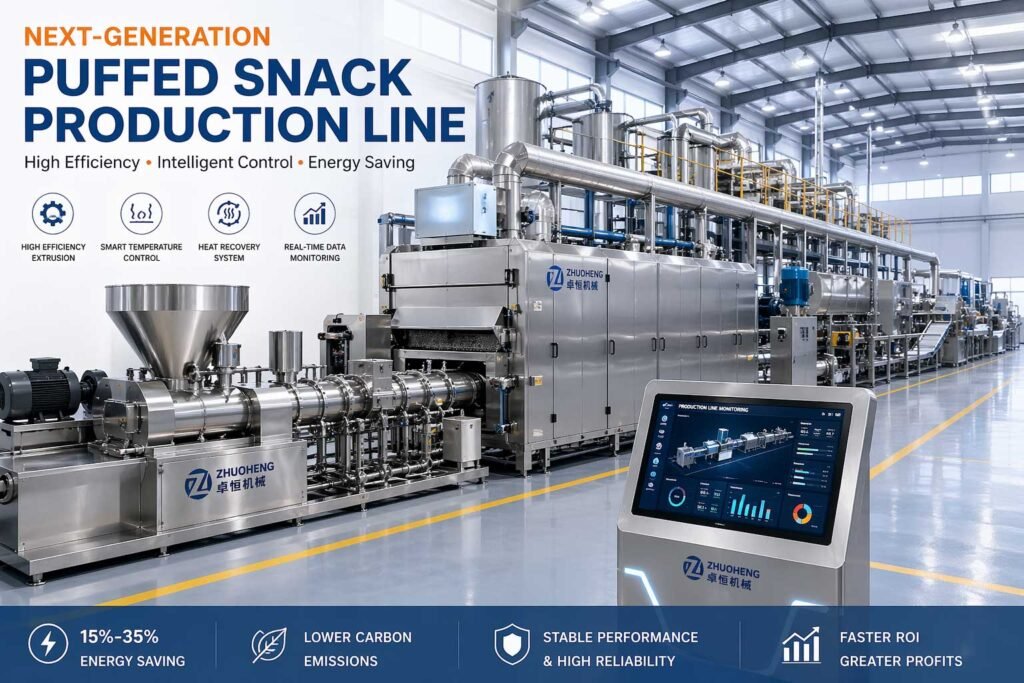
In 2026, energy consumption in puffed snack production lines typically accounts for 30–45% of total operational costs. Forward-thinking factories can achieve a 15–35% reduction in energy usage by focusing on five pillars:
High-efficiency extrusion (Induction heating + VFD).
Total heat recovery integration.
Smart automation and IoT-driven predictive maintenance.
Advanced drying system thermodynamics.
Strategic factory-level energy management.
Introduction: Why Energy Cost is the New "Invisible" Competitor
In the global snack manufacturing landscape of 2026, the battle for market share is no longer won just by having a unique flavor profile or high throughput. The real “silent” battlefield has shifted to the balance sheet—specifically, energy efficiency and snack production cost reduction.
With global electricity prices fluctuating and carbon regulation pressures mounting on B2B suppliers, factory owners are forced to confront a brutal reality: The cost of energy often determines your pricing power. If your competitors can produce the same ton of puffed snacks using 20% less electricity, they can out-compete you on price without sacrificing quality.
Unlike raw material costs, which are relatively transparent, energy consumption is often “invisible”—leaking through uninsulated dryers, wasted in idling motors, or lost in inefficient heating cycles. This guide serves as a roadmap to make that energy visible and, more importantly, to help you reclaim your lost profits.
Energy Mapping: The Foundation of Any Cost Reduction Strategy
You cannot manage what you do not measure. In my years of working with international snack brands, the most common failure I see is “aggregate metering”—where a factory has one main meter for the whole building, making it impossible to see which specific machine is bleeding money.
Why Most Factories Fail at Energy Control
Many facilities operate in the dark because they lack line-level tracking. They know the total monthly bill, but they don’t know the energy cost per kilo of product. This lack of granular data means waste becomes an accepted “cost of doing business.”
Building a Digital Energy Map
To truly understand how to reduce electricity in snack factory environments, we must implement sub-metering. Modern production lines should track:
Extrusion System: The high-torque peak load.
Pre-conditioning: The thermal preparation stage.
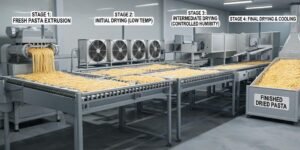
Drying Tunnel: The bulk thermal consumer.
Compressed Air & Packaging: The auxiliary loads.

Benchmark KPI: What Does “Efficient” Look Like?
Based on our latest industry benchmarks for 2026, a world-class Puffed Food Machine [Link to your Pillar Page] line should aim for:
120–220 kWh per ton (varies by product density).
40–55% energy allocation to drying.
18–30% energy allocation to extrusion.
If your factory is operating 20% above these benchmarks, you have a massive opportunity for optimization.
Extrusion System Optimization: The Core Energy Driver
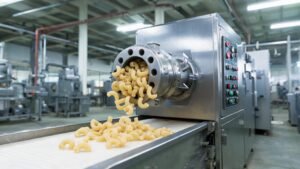
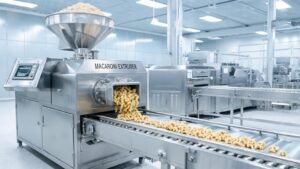
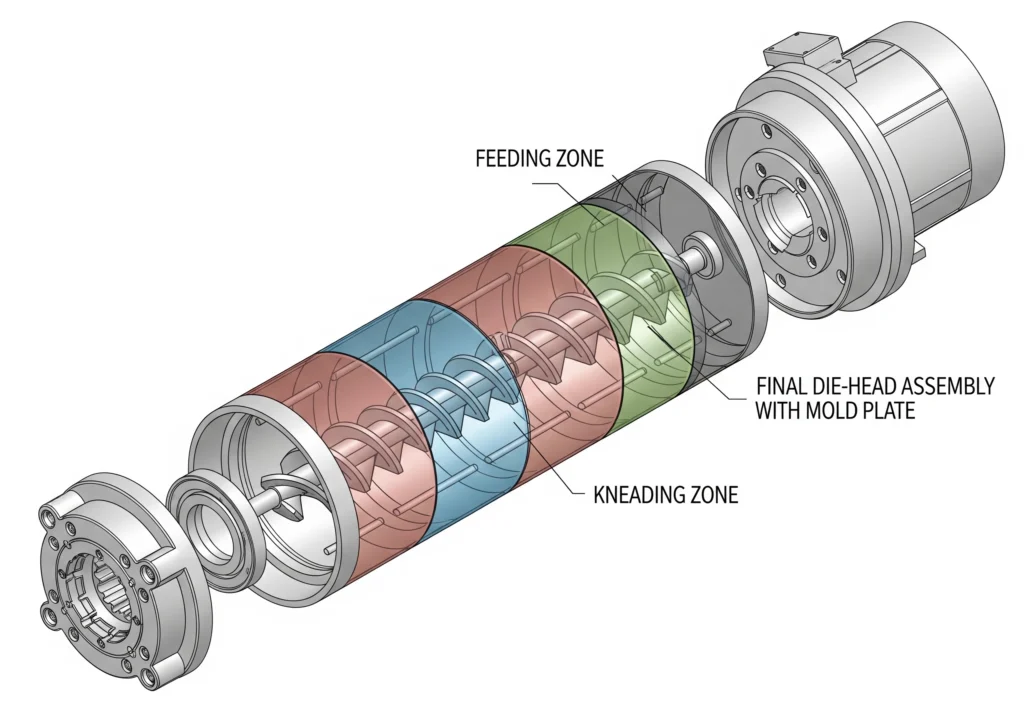
The extruder is the “engine room” of your production line. It is where the physical transformation happens, and it is the primary driver of your electricity demand.
From Resistance Heating to Induction Heating: A 2026 Standard
Old-school resistance heating is like using a stove to heat a room; much of the heat is lost to the surrounding air. food extruder energy saving starts with Induction Heating Technology.
Direct Heating: Induction heats the barrel directly using electromagnetic fields.
Efficiency: This reduces thermal loss by up to 50% compared to traditional band heaters.
Rapid Response: No more waiting an hour for the machine to warm up. Instant heat means reduced idling energy waste.
Variable Frequency Drives (VFD): The Dynamic Speed Governor
Running a motor at full speed when the line is only at 70% capacity is like flooring the gas pedal while the car is in neutral. VFD systems allow your Puffed Food Machine [Link to your Pillar Page] to breathe, adjusting its electrical draw to match the real-time material load.
Example: A 20% reduction in motor speed can lead to an exponential drop in energy consumption due to the laws of affinity in motor physics.
Material Engineering: The 38CrMoAl Advantage
At Zhuoheng, we emphasize that efficiency is mechanical as much as it is electrical. When screws wear down, internal friction increases. This leads to higher torque demand and motor overload. By using high-strength nitrided alloy materials like 38CrMoAl, we ensure a stable extrusion pressure that doesn’t degrade over time.
Drying System: Taming the Largest Energy Consumer
If you want to know how to reduce electricity in snack factory costs, look at your dryer. In many cases, the drying stage is where 50% of your total utility spend disappears into thin air—literally.
The Silent Profit Killer: Heat Leakage
If your drying tunnel is warm to the touch on the outside, you are paying to heat your factory air instead of your snacks.
High-Efficiency Thermal Insulation
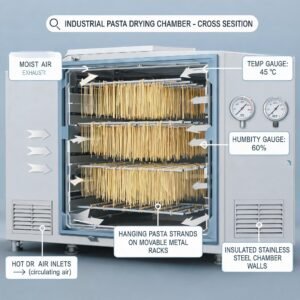
Modern Puffed Snack Machine dryers now use 100–150mm high-density rock wool insulation. By reducing thermal bridging and stabilizing internal zones, we can reduce reheating cycles significantly.
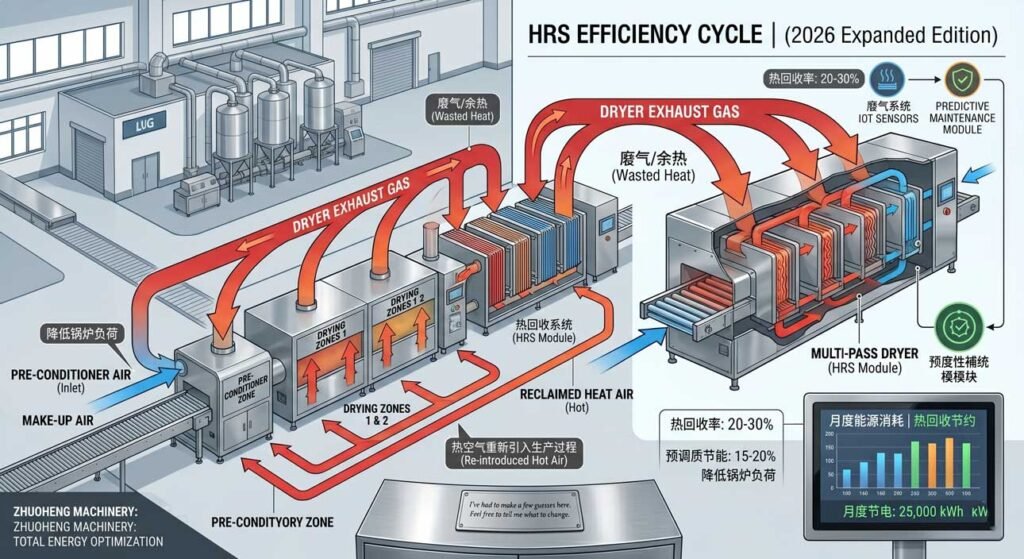
Heat Recovery Systems (HRS): Closing the Loop
This is the single most impactful upgrade available today. A Heat Recovery System captures the hot exhaust air from the dryer and redirects it.
Pre-heating: Use that “waste” heat to warm the incoming raw materials.
Boiler Load: Reduce the energy needed for steam generation.
Result: A typical 15–25% drop in total thermal energy consumption.
Smart Factory Systems: Turning Machines into Data Assets
In 2026, the best Snack Puffing Machine isn’t just a piece of iron; it’s a networked computer.
IoT-Based Monitoring
By integrating IoT sensors, our clients can track energy per batch. If batch #102 used 5% more power than batch #101, the system can flag it immediately. Is the raw material moisture too high? Is a bearing beginning to seize?
Predictive Maintenance
Predictive maintenance prevents “emergency starts.” Every time you restart a cold production line, the energy spike is massive. AI systems that detect bearing wear or heater degradation allow for scheduled, warm-starts that keep energy profiles stable.
Factory-Level Optimization Strategy
True snack production cost reduction requires looking beyond the machine.
Thermal Zone Segmentation
In your plant layout, isolate the high-temperature processing zones from the packaging and cooling areas. This prevents your HVAC system from fighting itself, saving up to 10% on total factory electricity.
Production Scheduling (The “Peak/Off-Peak” Strategy)
In many regions, electricity prices at 2:00 AM are a fraction of the cost at 2:00 PM. Smart scheduling involves:
Running high-energy extrusion during off-peak windows.
Planning cleaning cycles to align with low-cost energy periods.
The Human Factor: The Most Underrated Variable
Even the world’s most advanced Puffed Food Machine [Link to your Pillar Page] can be operated inefficiently.
Operator Training
An operator who understands the relationship between “feed rate” and “screw speed” is your best energy-saving tool. Inconsistent feeding causes the motor to surge and hunt for stability, wasting kilowatt-hours with every fluctuation.
Maintenance Discipline
Small leaks—air leaks, steam leaks, or poor lubrication—are like tiny holes in your bank account. A 1mm air leak can cost hundreds of dollars a year in unnecessary compressor runtime.

ROI Model: When Does an Energy Upgrade Pay Off?
Many factory managers ask: “Can I afford these upgrades?” In 2026, the question is: “Can you afford not to?”
VFD Upgrade: Typical Payback in 6–12 months.
Heat Recovery System: Typical Payback in 12–24 months.
Full Line Retrofit: Typical Payback in 18–36 months.
Conclusion: Efficiency as Your Competitive Moat
Reducing energy consumption is no longer a “green” initiative—it’s a survival strategy. Factories that prioritize snack production cost reduction through high-quality equipment and smart management will always have a lower cost-of-goods-sold (COGS) than those that don’t.
At Zhuoheng, we don’t just build a Puffed Snack Machine; we build profit-generating assets. If you are ready to modernize your line and dominate your market with superior efficiency, let’s talk.
FAQ: Energy Optimization in Snack Production
-
What is the biggest energy consumer in snack production?
The drying system typically consumes the highest percentage (40-55%) of total thermal energy.
-
Is upgrading equipment better than optimizing existing machines?
A hybrid approach is often best. Start by installing sub-meters and VFDs on existing motors, then move to upgrading core heating units to induction technology.
-
How fast can factories see ROI?
Most energy optimization projects in the snack industry pay back within 6–24 months depending on local energy rates.
-
Does energy saving affect product quality?
Actually, it usually improves it. Precise control over temperature and speed leads to better texture consistency and higher product density stability.
-
What is the first step in energy optimization?
Conduct a full energy audit. You must create a line-level energy map before you can make informed investment decisions.