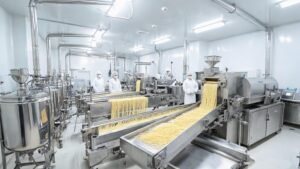
En el arriesgado mundo de la producción industrial de alimentos, su Máquina de alimentos inflados es algo más que una pieza de hardware: es el latido de su rentabilidad. Cuando la producción es perfecta -crujiente, uniforme y ligera- el negocio va viento en popa. Pero cuando empieza a ver bolsas planas, superficies grasientas o texturas incoherentes, cada minuto de tiempo de inactividad o material “desechado” es un golpe directo a su cuenta de resultados.
Si ha pasado algún tiempo en una fábrica, sabrá que la extrusión es tanto un arte como una ciencia. La mayoría de las guías te dan consejos superficiales como “comprueba la temperatura”. Esta guía va más allá. Basándonos en décadas de experiencia en fabricación e ingeniería de campo, desmenuzamos la compleja física de la extrusión. solución de problemas de la máquina de aperitivos inflados y proporcionando la problemas comunes de extrusión y soluciones que necesita para mantener sus líneas funcionando 24 horas al día, 7 días a la semana.
La física del "soplo perfecto": Por qué las cosas se tuercen
Para resolver un problema, hay que entender el proceso de “evaporación flash”. Dentro de un Máquina de alimentos inflados, Las materias primas se someten a un intenso cizallamiento mecánico y a energía térmica. La humedad del interior de la masa se convierte en vapor sobrecalentado a alta presión.
En el momento en que el material sale de la placa perforada, esa presión cae instantáneamente. El vapor se expande, creando la estructura celular del snack. Si su “hojaldre” está fallando, el equilibrio entre la presión del vapor y la resistencia estructural de su matriz de almidón se ha colapsado.

Baja Expansión: Por qué sus aperitivos parecen planos y pesados
La baja expansión es la queja #1 en la producción de aperitivos B2B. Un snack denso parece “barato” para el consumidor y aumenta el peso de envío por bolsa, lo que perjudica los márgenes.
La zona de humedad “Ricitos de oro” (15%-20%)
La mayoría de los operadores piensan que más agua equivale a más vapor, lo que debería significar más expansión. Esto es una trampa.
Exceso de humedad: Si la humedad supera los 20%, la masa se vuelve demasiado elástica. El vapor la expande, pero las “paredes” del bocadillo son demasiado pesadas para mantener la forma, lo que provoca un colapso antes de que el bocadillo se seque.
Falta de humedad: Por debajo de 14%, simplemente no hay suficiente vapor para crear el volumen. El resultado es un producto pequeño, pedernal y peligrosamente duro.
La ciencia del almidón: Amilosa vs. Amilopectina
Si su humedad es perfecta pero la expansión sigue siendo baja, fíjese en su materia prima.
Amilopectina es la parte “elástica” del almidón que permite una expansión masiva.
Amilosa proporciona el “crujido” y la rigidez estructural. Si utiliza un nuevo proveedor de maíz con un alto contenido en proteínas o fibras, estas últimas actúan como “barras de refuerzo” en el hormigón: impiden que el almidón se expanda. En estos casos, su solución de problemas de la máquina de aperitivos inflados debería consistir en ajustar la receta para incluir un almidón de mayor pureza.
Crisis de textura: Cómo resolver el problema de los aperitivos "duros como piedras
Un aperitivo puede parecer grande pero morder como una piedra. En el sector, a esto lo llamamos textura “pedernalina”. Suele ser señal de problemas comunes de extrusión y soluciones relacionado con el “cizallamiento mecánico”.”
Velocidad excesiva de cizallamiento y de atornillado
Si su Máquina de hacer bocadillos funciona a un número de revoluciones demasiado alto para la receta específica, la energía mecánica puede “cocer en exceso” el almidón, rompiendo tanto las cadenas moleculares que pierden su capacidad de formar un entramado ligero y aireado.
La solución: Intente reducir la velocidad del tornillo en 5-10% mientras aumenta ligeramente la temperatura en la zona de calentamiento final para compensar. Esto permite que el almidón siga siendo de “cadena larga” y proporciona una textura que se deshace en la boca.

Gestión de defectos superficiales: Engrasamiento y quemaduras
Independientemente de que se utilice un producto frito o no frito Máquina de aperitivos inflados, El acabado de la superficie es lo que vende el producto.
Absorción excesiva de aceite (aperitivos grasientos)
Para los bocadillos fritos, el aceite suele ser el ingrediente más caro. Si tus bocadillos “beben” aceite:
Compruebe la formación de la “corteza”: Si la temperatura del aceite es demasiado baja (inferior a 160 °C), la superficie no se sella con la suficiente rapidez. El aceite se filtra en el núcleo.
Densidad de la masa: Si el snack no se expandió lo suficiente en la extrusora, actuará como una esponja en la freidora. Arregle primero la expansión, y la untuosidad suele desaparecer.
El problema del azúcar “quemado
Si sus aperitivos se vuelven marrones o tienen un sabor amargo a pesar de que los sensores indican 170°C, compruebe las proporciones de azúcar y proteínas. Las recetas con alto contenido en azúcar sufren la “reacción de Maillard” mucho más rápido. Puede que tenga que bajar la temperatura de la Zona 3 y confiar más en la fricción mecánica (cizallamiento) para cocinar el producto que en el calor externo.
Mantenimiento mecánico: La causa oculta de la chatarra
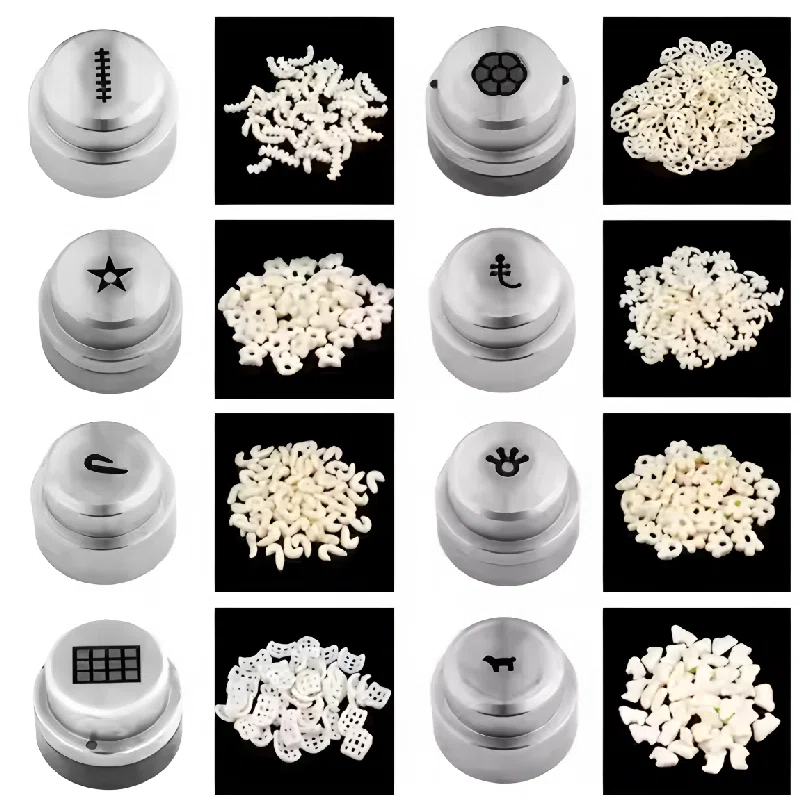
A veces la receta es perfecta, pero el metal está cansado. Un profesional Máquina de alimentos inflados requiere un estricto procedimiento operativo normalizado de mantenimiento para evitar la “sobrecarga”, es decir, la variación de tamaño del producto.
Espacio entre el tornillo y el cañón
Durante meses de producción a gran escala, el espacio entre el tornillo y el cilindro se ensancha. Cuando esta holgura supera la tolerancia del fabricante, el material empieza a “resbalar” hacia atrás.
El síntoma: Te das cuenta de que tienes que seguir subiendo la temperatura o las revoluciones para obtener los mismos resultados que el mes pasado.
La solución: Recomendamos utilizar tornillos de aleación de alto contenido en cromo 12MoV. Duran mucho más, pero hay que medirlos trimestralmente. Si está experimentando una presión inconsistente, es una parte clásica de solución de problemas de la máquina de aperitivos inflados.
Higiene de la placa perforada
Un solo orificio obstruido en una placa perforada de 20 orificios no sólo le hace perder 5% de su producción, sino que arruina los otros 95%. La presión destinada a ese 20º orificio se desvía a los otros 19, lo que provoca que se expandan en exceso y se deformen.
Consejo profesional: Ponga en práctica un programa de “purga y extracción”. No deje nunca material en el troquel durante la pausa para comer; el calor residual “carbonizará” el almidón, creando un tapón duro como una roca que es casi imposible retirar sin dañar los orificios fresados con precisión.
La variable del medio ambiente: Por qué importan el verano y el invierno
Si usted es cliente de comercio internacional, puede que note que su Máquina de hacer bocadillos se comporta de forma diferente en julio que en enero.
Humedad ambiente: En las regiones tropicales o costeras, la harina de una tolva abierta puede absorber 2% humedad del aire en pocas horas. Esto es suficiente para salir de la zona “Ricitos de oro” de 15-20%.
Fluctuaciones de tensión: En muchos mercados emergentes, el voltaje de fábrica puede bajar durante las horas punta. Si su motor no recibe una potencia constante, las revoluciones por minuto de su husillo fluctuarán, lo que provocará aperitivos “ondulados” o desiguales. Invertir en un variador de frecuencia de alta calidad es la mejor solución. problemas comunes de extrusión y soluciones para esta edición.
Nuestras soluciones, líderes del sector
En nuestra fábrica de origen, no sólo construimos máquinas; diseñamos rentabilidad. Sabemos que, como operador B2B, necesita una Máquina de aperitivos inflados que es “perdonar”.”
Nuestra última serie está protagonizada por:
Tecnología de tornillo segmentado: Permite sustituir sólo las secciones desgastadas de un tornillo en lugar de toda la unidad, ahorrando 60% en costes de mantenimiento.
Control de temperatura PID de precisión: Nuestros sistemas controlan el “exceso” de temperatura que provoca quemaduras en los modelos más baratos.
Rodamientos axiales mejorados: Diseñado para soportar la alta contrapresión necesaria para las modernas recetas de aperitivos ricos en proteínas o fibra.
Más allá de lo básico: cómo afecta la química de los ingredientes a su máquina
Si bien hemos hablado de la humedad, la “matriz molecular” real de su receta es a menudo donde problemas comunes de extrusión y soluciones se encuentran. Para un director de fábrica, comprender que su Máquina de hacer bocadillos es esencialmente un reactor químico de alta presión es la clave para dominar el proceso.
La barrera proteínica
En el mercado moderno están de moda los aperitivos “ricos en proteínas”. Sin embargo, las proteínas se comportan de forma muy diferente al almidón. Mientras que el almidón se expande, la proteína enlaces cruzados. Si su receta excede la proteína 10-15% (como la proteína de soja o guisante), la masa se vuelve mucho más dura. Esto aumenta la carga sobre el motor de su Máquina de alimentos inflados.
El síntoma: Alto par motor y olor a “tostado”, pero muy poca expansión.
La solución: Debe aumentar la “Relación L/D” (longitud/diámetro) de su tornillo o añadir un agente lubricante como la lecitina para ayudar a que la proteína se deslice por el troquel sin carbonizarse.
Ruptura de la fibra y de la “pared celular
Añadir salvado o cereales integrales es estupendo para la etiqueta “saludable”, pero la fibra no se puede expandir. Piense en la fibra como en una aguja. Cuando la burbuja de vapor intenta crecer, la fibra “pincha” la burbuja, haciendo que estalle prematuramente. Esta es una parte clásica de solución de problemas de la máquina de aperitivos inflados. Para contrarrestar esto, se necesita una mayor fuerza de “cizallamiento” para moler la fibra en partículas más pequeñas que no interfieran con las burbujas de almidón.
Solución de problemas de "sobretensión" e inestabilidad del caudal
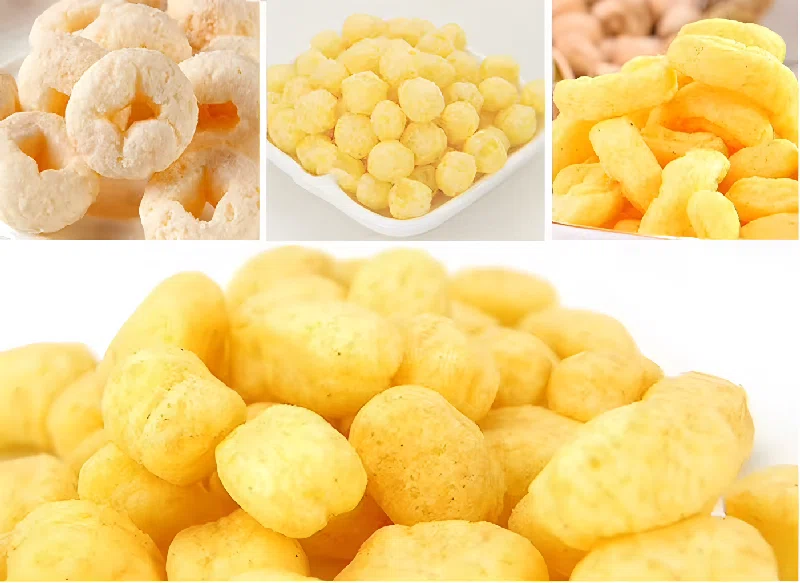
Pocas cosas hay más frustrantes para un operario que una máquina que “pulsa”. En un momento las bocanadas son enormes, al siguiente son diminutas. Esta “pulsación” es una de las más problemas comunes de extrusión y soluciones que tratamos en las configuraciones B2B.
Causa 1: Deslizamiento del cañón
Si la superficie interna de su barril se vuelve demasiado lisa (o si la receta es demasiado aceitosa), la masa simplemente gira con el tornillo en lugar de ser empujada hacia adelante. Esto se llama “deslizamiento de la barrica”.”
La solución: Diseñamos nuestros Máquina de alimentos inflados barriles con ranuras longitudinales. Estas ranuras actúan como el “estriado” de una pistola, agarrando la masa y forzándola hacia la matriz.
Causa principal 2: Alimentación incoherente
Si su tolva está “puenteando” (material pegado a los lados), el tornillo no está siendo alimentado con un volumen constante.
La solución: Utilice un alimentador vibratorio o un alimentador volumétrico de doble husillo para garantizar que cada revolución del husillo principal tenga exactamente la misma cantidad de materia prima con la que trabajar.
El factor "aguas abajo": Cuestiones de secado y condimentación
Su Máquina de aperitivos inflados ha hecho su trabajo, pero el producto no está “terminado” hasta que está seco y aromatizado. La resolución de problemas no se detiene en la extrusora.
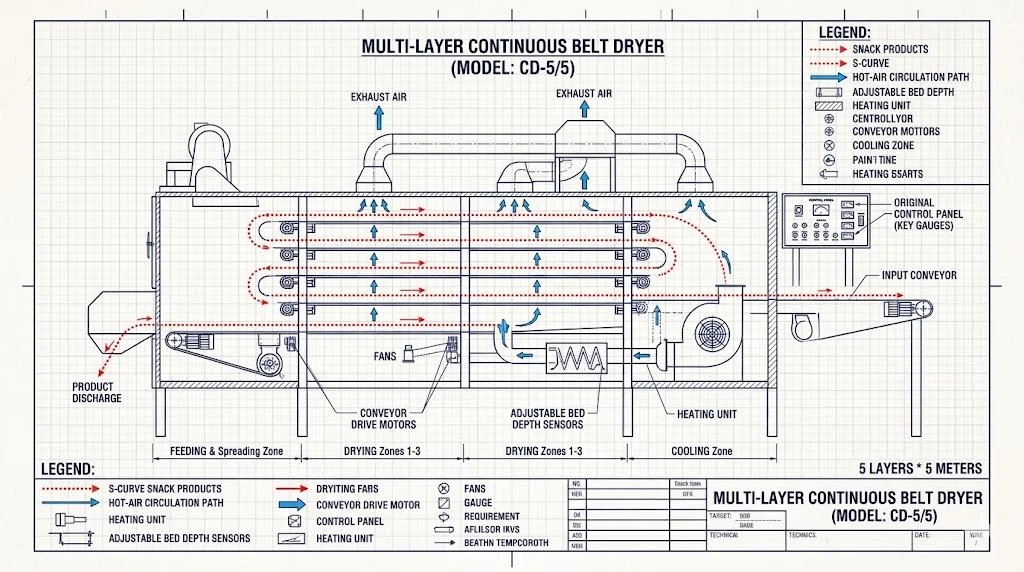
El “centro empapado” (secado ineficaz)
Si su snack está crujiente por fuera pero “chicloso” después de 24 horas en la bolsa, tiene humedad interna residual.
Paso de solución de problemas: Compruebe la “Profundidad del lecho” en su secador de cinta. Si los snacks están apilados demasiado altos, el aire no puede circular por las capas inferiores. Reduzca la velocidad de la cinta o aumente el volumen del flujo de aire.
Sazonar “Fall-off”
Si su condimento está en el fondo de la bolsa y no en el bocadillo, su “Tack” (aceite en aerosol) está fallando.
La solución: La condimentación debe realizarse inmediatamente después del secado, mientras el aperitivo aún está caliente (aprox. 50-60°C). El calor ayuda a que el aceite penetre en los poros de la superficie, creando un “pegamento” para el polvo aromatizante.
Tornillo único frente a tornillo doble: La selección estratégica
A la hora de ampliar su fábrica, elegir entre un equipo de un solo husillo y uno de dos husillos Máquina de aperitivos inflados es una decisión crítica que afecta a su futuro solución de problemas de la máquina de aperitivos inflados carga de trabajo.
Máquinas monohusillo: Son “dependientes de la fricción”. Son excelentes para productos sencillos con alto contenido en almidón (como la sémola de maíz 100%). Sin embargo, tienen una “ventana operativa” limitada. Si la humedad o la temperatura cambian ligeramente, la calidad cambia drásticamente.
Máquinas de doble husillo: Son máquinas de “desplazamiento positivo”. Son mucho más estables. Como los dos tornillos se engranan, se “autolimpian” y fuerzan el material a avanzar independientemente del contenido de aceite o azúcar. Para los clientes B2B que desean producir aperitivos “Premium” o “Funcionales”, el doble tornillo es el estándar de fiabilidad del sector.
PNT de mantenimiento industrial: Una guía de fábrica
Para evitar la problemas comunes de extrusión y soluciones que hemos comentado, su equipo de mantenimiento debe seguir este Procedimiento Operativo Estándar (SOP).
Semanal: La comprobación del “cojinete de empuje
El cojinete de empuje es lo que permite que el tornillo empuje contra el material. Si oye un “chirrido” o un gemido “agudo”, el cojinete está fallando. Si un cojinete falla durante un turno, puede agarrotar el tornillo, causando semanas de inactividad.
Mensual: Calibración de termopares
Los sensores térmicos pueden “desviarse” con el tiempo. Si su PLC dice 170°C, pero la fusión real es de 185°C, experimentará una “quema fantasma” que hace que solución de problemas de la máquina de aperitivos inflados imposible. Utilice un termómetro láser externo para verificar sus sensores cada 30 días.
Trimestral: Mapas de desgaste de tornillos
Saque el tornillo. Mida el diámetro en la “zona de compresión” (los últimos 3-4 vuelos). Si ha perdido más de 1,5 mm de diámetro, su eficacia de expansión disminuirá en 20%. Nuestro Máquina de hacer bocadillos Los componentes están fabricados con una aleación 12MoV para garantizar que alcances estas marcas de 3 meses con un desgaste mínimo.
Caso práctico: Cómo resolver la "mordedura dura" de una mezcla de maíz y arroz
El cliente: Una planta de transformación de tamaño medio en Sudamérica.
El problema: Su anillo 50/50 de maíz y arroz salía con una textura “vidriosa” demasiado dura para que se lo comieran los niños.
La investigación: Analizamos sus Máquina de alimentos inflados ajustes. Funcionaban a un régimen muy alto (450 rpm) pero a una temperatura baja del barril (140°C).
La resolución de problemas: 1. Nos dimos cuenta de que la “mordedura dura” estaba causada por la “retrogradación del almidón”: el almidón estaba siendo dañado mecánicamente por las altas RPM, pero no estaba lo suficientemente “fundido” por el calor. 2. Bajamos las RPM a 380 y subimos la temperatura de la Zona 3 a 175°C. 3.
El resultado: El menor cizallamiento preservó las cadenas de almidón, y el mayor calor proporcionó un mejor “flash”. La densidad del snack disminuyó en 15%, y el “crujido” se hizo ligero y crujiente.
Eficiencia energética: Reducir el "coste por tonelada"
En el mundo, gana la máquina que menos electricidad consume por tonelada de producto.
Aislamiento: Muchos propietarios de fábricas olvidan aislar su barrica. Envolviendo la barrica con aislamiento de fibra cerámica, puede reducir el consumo de energía para calefacción hasta 25%.
Factor de potencia: Asegúrese de que su fábrica dispone de una batería de condensadores. Los motores de las extrusoras son cargas inductivas; sin corrección del factor de potencia, estará pagando a su compañía eléctrica por energía “desperdiciada”.
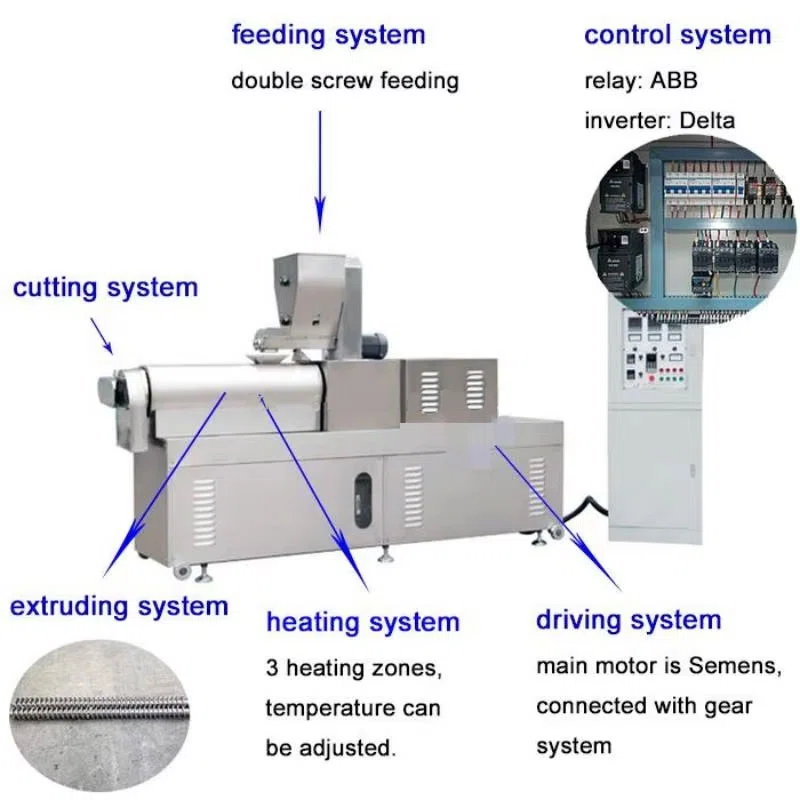
Preguntas y respuestas finales: Soluciones expertas para propietarios de fábricas
-
¿Cómo puedo solucionar un troquel "atascado" sin detener toda la línea?
A: Por eso recomendamos los conjuntos de troqueles "Quick-Change". En una Máquina de aperitivos inflados, El cabezal de troquelado debe estar montado sobre un brazo oscilante que permita cambiar un troquel sucio por otro limpio en menos de 5 minutos.
-
¿Puedo volver a utilizar "regrind" (snacks de desecho triturados) en la máquina?
A: Sí, pero sólo hasta 5-10%. La corteza ya ha sido "cocinada", por lo que no se expande por segunda vez. Si utiliza demasiada, el producto se volverá denso y oscuro.
-
¿Cuál es el mayor error que cometen los nuevos operadores?
A: No dejar que la máquina alcance el "Equilibrio Térmico". Debe hacer funcionar la máquina con agua y una "mezcla de arranque" durante al menos 20-30 minutos, hasta que el metal del barril se empape térmicamente. Si inicia la producción demasiado pronto, sus primeros 100 kg de producto serán chatarra.
-
¿Cómo evito que mis aperitivos se "rompan" en la envasadora?
A: Suele tratarse de un problema de "secado". Si seca el snack demasiado rápido a una temperatura demasiado alta, crea "tensión interna". Baje la temperatura del secador y aumente el tiempo de secado. Esto "recuece" el snack, haciéndolo mucho más duro y menos propenso a romperse durante el transporte.
Conclusión: Su socio en la producción
Dominar la Máquina de alimentos inflados es un viaje de ajustes constantes. Siguiendo esta guía para solución de problemas de la máquina de aperitivos inflados y mantenerse por delante de problemas comunes de extrusión y soluciones, usted se asegura de que su establecimiento siga siendo líder en el mercado de los aperitivos.
En nuestra fábrica, proporcionamos algo más que el Máquina de hacer bocadillos; le proporcionamos los conocimientos de ingeniería necesarios para garantizar el éxito de su receta específica. Tanto si está solucionando problemas de una línea antigua como diseñando una nueva, nuestro equipo está preparado para ayudarle a optimizar cada gramo de producción.