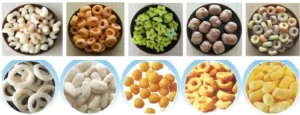
تشهد سوق الوجبات الخفيفة العالمية حاليًا تحولاً جذريًا. فعلى مدى عقود، كانت فئة "النفخة" مرادفًا للذرة - وتحديدًا الذرة المجعدة ذات الصوديوم العالي والمغطاة بالبرتقال والتي كانت تقدم استساغة عالية ولكن قيمتها الغذائية ضئيلة. ومع ذلك، ومع اقترابنا من منتصف هذا العقد، فإن السرد آخذ في التغير. فبدافع من قاعدة مستهلكين أكثر وعيًا ووعيًا بالصحة، تتجه الصناعة نحو "الوجبات الخفيفة الوظيفية".
بالنسبة لمؤسسات تجهيز الأغذية والمشترين العالميين، هذا ليس مجرد اتجاه - إنها إعادة هيكلة أساسية لسلسلة التوريد وتكنولوجيا الإنتاج. يتطلب الانتقال من وصفات بسيطة تعتمد على الذرة إلى مكونات معقدة وغنية بالعناصر الغذائية مثل الكينوا والعدس والحمص أكثر من مجرد تغيير في المواد الخام. بل يتطلب تغييرًا متطورًا آلة نفخ الطعام المنفوخ قادرة على إدارة التحولات الميكانيكية الحرارية المعقدة التي تتطلبها هذه "الأطعمة الخارقة". في تشووهانغ، أمضينا سنوات في هندسة هذه التحولات لضمان قدرة عملائنا على تلبية الطلب المتزايد على وجبات الكينوا الخفيفة دون المساس بالقوام أو العمر التخزيني أو كفاءة الإنتاج.
تطور سوق الوجبات الخفيفة الصحية
للحفاظ على القدرة التنافسية في ساحة التجارة الدولية، يجب على المرء أولاً فهم "لماذا" وراء "ماذا". لا يرجع تراجع منتجات نفث الذرة التقليدية في قطاعات السوق المتميزة إلى نقص النكهة، بل إلى نقص المضمون. يبحث المستهلكون اليوم - خاصةً في أمريكا الشمالية وأوروبا وأجزاء من آسيا - عن منتجات "العلامة النظيفة". إنهم يريدون قوائم مكونات قصيرة، وحبوبًا يمكن التعرف عليها، وفوائد وظيفية مثل البروتين العالي والألياف.
صعود الكينوا والبقوليات
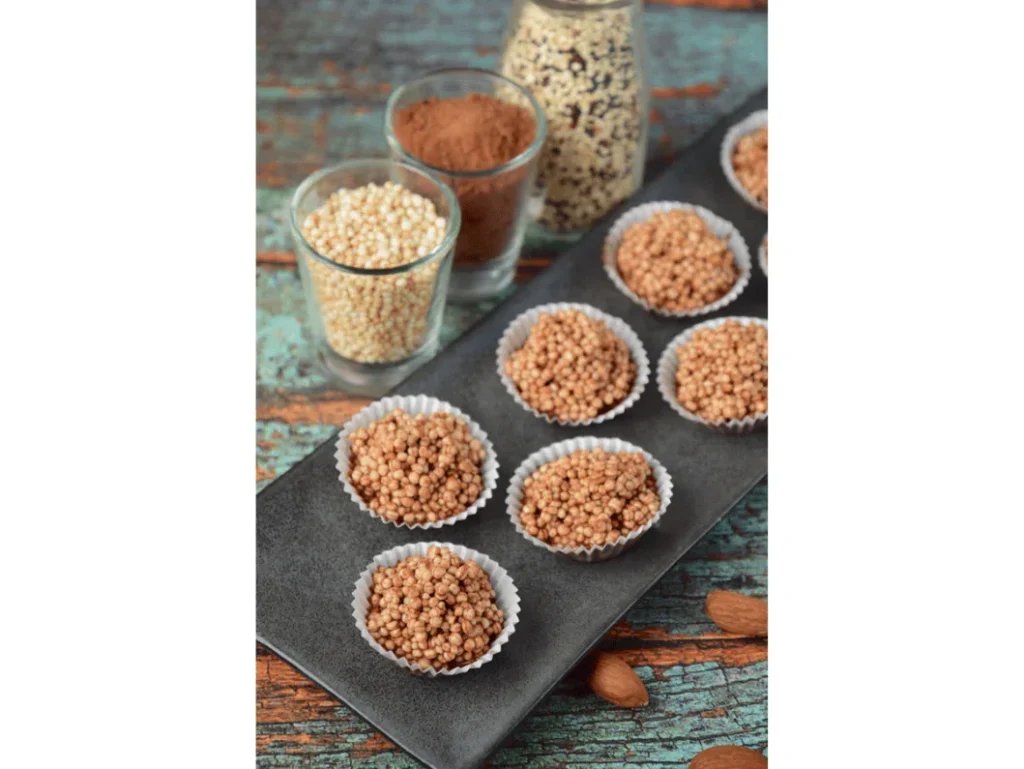
غالبًا ما يُشار إلى الكينوا على أنها "المعيار الذهبي" لثورة الوجبات الخفيفة الصحية. وباعتبارها حبوباً زائفة، فهي بروتين كامل يحتوي على جميع الأحماض الأمينية الأساسية التسعة. وهذا يجعل وجبات الكينوا الخفيفة أداة تسويقية قوية لأي علامة تجارية غذائية. ومع ذلك، من من منظور التصنيع، تعتبر الكينوا مكونًا "صعبًا". فعلى عكس الذرة، التي تحتوي على نسبة عالية من النشا وسهلة التمدد نسبيًا، تحتوي الكينوا على نسبة عالية من الدهون والألياف. تعمل هذه المكونات بمثابة "قواطع للفقاعات" أثناء عملية التمدد، وغالبًا ما ينتج عنها منتج كثيف وصلب إذا لم تتم معالجته بدقة ماكينة نفخ الوجبات الخفيفة.
يتبع العدس والحمص (البقول) منطقًا مشابهًا. فهي تقدم نكهة "ترابية" رائعة ومليئة بالحديد النباتي والفولات. ويكمن التحدي بالنسبة للمصنع في تحقيق تلك القرمشة "الذائبة في الفم" الشهيرة مع الحفاظ على سلامة هذه العناصر الغذائية الحساسة. وهنا يأتي دور إنتاج الوجبات الخفيفة المنفوخة بالكينوا يصبح علم الهندسة الدقيقة.
محركات السوق لعام 2026 وما بعده
بينما نحلل اتجاهات ماكينات الوجبات الخفيفة المنفوخة الصحية 2026فمن الواضح أن "الشفافية" هي العملة الجديدة. لم تعد مصانع المعالجة تبحث عن "آلة" فحسب، بل أصبحت تبحث عن شريك مثل تشووهانغ الذي يفهم البيئة التنظيمية العالمية. يبحث المشترون عن معدات يمكنها التعامل مع:
شهادة خلو من الغلوتين: ضمان عدم انتقال التلوث التبادلي وسهولة التنظيف.
معالجة منخفضة الأكريلاميد: التحكم في درجات الحرارة لمنع تكوين مركبات ضارة أثناء البثق عالي الحرارة.
التوافق مع المواد غير المعدلة وراثياً والعضوية: التعامل مع الدقيق العضوي الدقيق دون تدهور جودته.
إن التحول نحو المكونات الصحية هو انتقال دائم لمركز ثقل الصناعة. وبالنسبة لمؤسسة المعالجة، فإن الخيار بسيط: إما التكيف مع التكنولوجيا عالية الأداء أو فقدان حصتها في السوق لصالح المبتكرين. من خلال الاستفادة من أحدث ما توصلت إليه آلة نفخ الطعام المنفوخفأنت لا تقوم فقط بإعداد الوجبات الخفيفة، بل تقوم بتأمين عملك في المستقبل.


علم البثق - هندسة النفخة المثالية
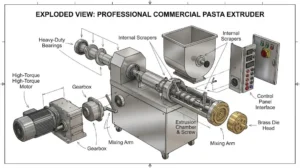
بالنسبة للعين غير المدربة، فإن آلة نفخ الطعام المنفوخ قد تبدو كقطعة بسيطة من الأجهزة الصناعية. ومع ذلك، بالنسبة لعالم الأغذية أو مدير الإنتاج في تشووهانغ، فهو عبارة عن وعاء مضغوط عالي المعايرة حيث تحدث تفاعلات كيميائية حيوية معقدة في أجزاء من الثانية. عندما ننتقل من الذرة إلى وجبات الكينوا الخفيفة، فإننا نقوم بشكل أساسي بتغيير "وقود" الماكينة، مما يستلزم فهماً أعمق لتقنية الطهي بالبثق (ECT).
التحول الميكانيكي الحراري
في إنتاج الوجبات الخفيفة المنفوخة بالكينوايخضع الدقيق الخام لعملية تعرف باسم "الانتقال الزجاجي". داخل برميل ماكينة الوجبات الخفيفة المنفوخةتتعرض المادة لثلاث قوى أساسية: الطاقة الحرارية (الحرارة)، والطاقة الميكانيكية (القص)، والرطوبة.
جلتنة النشا: على عكس الذرة، التي تتميز بسلوك نشا يمكن التنبؤ به للغاية، فإن حبيبات نشا الكينوا أصغر بكثير. فهي تتطلب "درجة حرارة بداية" محددة لتنفجر وتشكل ذوبان البوليمر. إذا كان ملف درجة الحرارة داخل ماكينة نفخ الوجبات الخفيفة منخفضة جدًا، فلن يتحلل النشا إلى جيلاتيني، مما يؤدي إلى مذاق "نيء" وقوام شائك.
تمسخ البروتين والربط المتقاطع: هذا هو المكان وجبات الكينوا الخفيفة تصبح صعبة. الكينوا غنية بالجلوبيولين والألبومين. وتحت بيئة القص العالية في الطارد، تتفكك هذه البروتينات وتشكل مصفوفة هيكلية جديدة. وهذه المصفوفة هي ما يحمل فقاعات الهواء. إذا كان القص شديدًا للغاية، فإنك "تفرط في قص" البروتينات، وتنهار الوجبة الخفيفة عند خروجها من القالب.
مرحلة التبخر الوميضي: عند خروج العجين من القالب، ينخفض الضغط الداخلي من 100 بار إلى 1 بار (الضغط الجوي) على الفور. ويتحول الماء شديد السخونة داخل العجين إلى بخار، مما يخلق البنية الخلوية التي نعرفها باسم "النفخة". وبسبب المحتوى العالي من الألياف في الكينوا والعدس، فإن فقاعات البخار هذه عرضة للتفرقع قبل الأوان.
التحكم الدقيق في المعلمات
بالنسبة لمؤسسة المعالجة، فإن "الاتساق" هو المقياس الذي يحدد الربحية. الجودة العالية ماكينة الوجبات الخفيفة المنفوخة يجب أن توفر تحكمًا دقيقًا في العديد من المتغيرات:
الطاقة الميكانيكية المحددة (SME): هذه هي كمية الطاقة التي يوفرها المحرك لكل كيلوغرام من دقيق الكينوا. نقوم بمعايرة تشووهانغ الماكينات للحفاظ على ثبات مستوى الرطوبة في الحبوب الخام حتى مع تذبذب محتوى الرطوبة في الحبوب الخام.
توزيع زمن الإقامة (RTD): مدة بقاء الكينوا داخل "المنطقة الساخنة" مهمة. إذا طالت المدة أكثر من اللازم، ستحصل على "تحمير المايارد" (نكهات محترقة)؛ وإذا قصرت المدة أكثر من اللازم، لن يكون المنتج مطهوًا جيدًا.
من خلال إتقان هذه المبادئ العلمية تشووهانغ يضمن لك أن إنتاج الوجبات الخفيفة المنفوخة بالكينوا يقدم خط الإنتاج منتجًا ليس صحيًا فحسب، بل يتمتع أيضًا ب "ملمس فموي" فائق - وهي الجودة المراوغة التي تجعل المستهلكين يعودون للحصول على المزيد.


Twin-Screw Technology – The Industry Standard for 2026
If the science is the “why,” then the twin-screw extruder is the “how.” In the realm of اتجاهات ماكينات الوجبات الخفيفة المنفوخة الصحية 2026, the single-screw extruder is rapidly becoming obsolete for high-end applications. To handle the fibrous, high-protein nature of وجبات الكينوا الخفيفة, a twin-screw system is non-negotiable.
Why Twin-Screw for Superfoods?
The primary advantage of the تشووهانغ twin-screw ماكينة نفخ الوجبات الخفيفة is its “Positive Displacement” capability. In a single-screw machine, the material often slips against the barrel wall, leading to uneven cooking. In a twin-screw system, the intermeshing screws act like a pump, forcing the material forward regardless of its viscosity or stickiness.
Handling High-Fiber Ingredients: Lentils and quinoa are abrasive and sticky. Our twin-screw ماكينة الوجبات الخفيفة المنفوخة utilizes modular screw elements. This means we can “build” a screw specifically for your recipe—adding kneading blocks where more mixing is needed and reverse elements where more pressure is required.
Self-Cleaning Dynamics: High-protein materials tend to bake onto the screw surface during downtime. The “wiping” action of our twin screws ensures that the barrel remains clean, reducing waste during start-up and shutdown.
Thermal Accuracy: Our barrels are divided into multiple heating and cooling zones. For إنتاج الوجبات الخفيفة المنفوخة بالكينوا, we might keep the feeding zone cool to prevent premature clumping, while the final “cooking zone” is boosted to exactly 160°C to ensure maximum expansion.
Engineering for Durability
في تشووهانغ, we understand that for a factory, downtime is the enemy. Our ماكينة الوجبات الخفيفة المنفوخة gearboxes are engineered for high-torque applications. When you are pushing a dense lentil-based dough through a small die, the back-pressure is immense. Our thrust bearings and lubrication systems are designed to handle 24/7 production cycles, ensuring that your إنتاج الوجبات الخفيفة المنفوخة بالكينوا never skips a beat.
By choosing a twin-screw آلة نفخ الطعام المنفوخ, you are investing in versatility. Today you may produce quinoa puffs; tomorrow, with a simple change of the screw profile and die, you could be producing high-protein lentil chips or even textured vegetable protein (TVP) meat analogues.
The Industrial Workflow – A Symphony of Automation
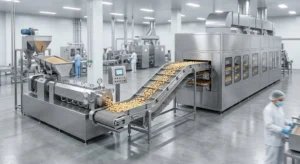
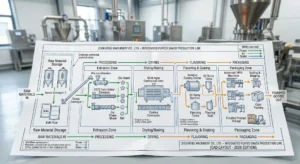
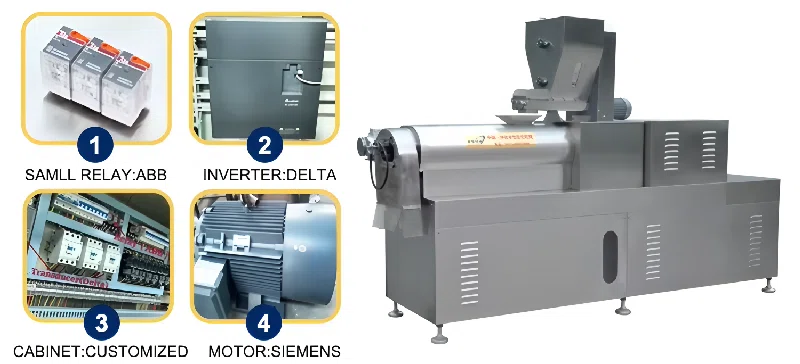
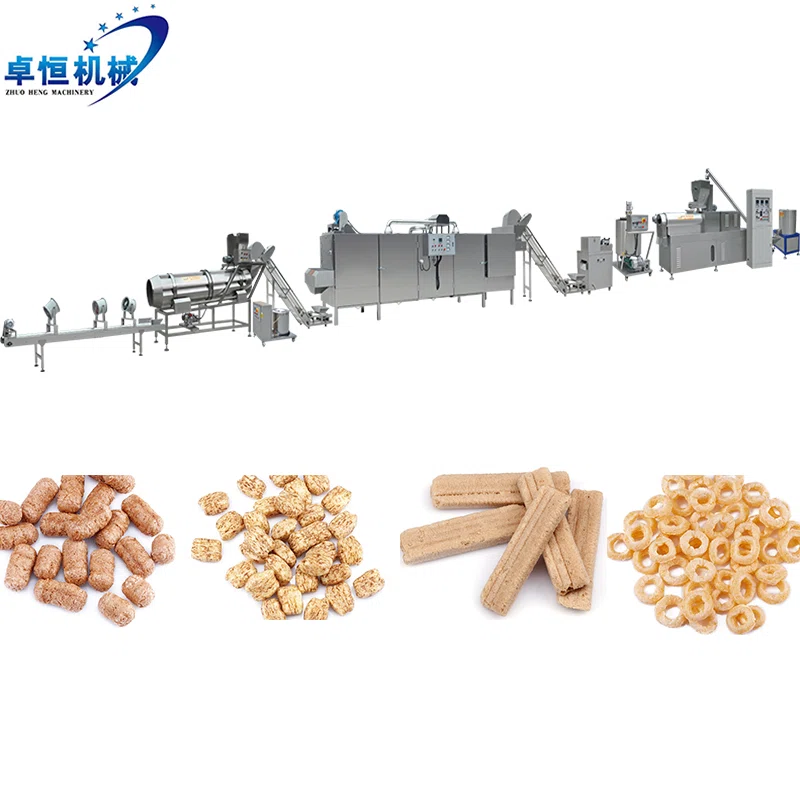
For a factory manager, the آلة نفخ الطعام المنفوخ is the heart of the operation, but the body consists of several critical organs that must work in perfect synchronization. To achieve a high-yield إنتاج الوجبات الخفيفة المنفوخة بالكينوا, every stage—from the raw grain silo to the final nitrogen-flushed bag—must be optimized for the specific physical properties of superfoods.
Step 1: Raw Material Preparation and Micro-Dosing
The secret to premium وجبات الكينوا الخفيفة starts in the mixer. Quinoa and lentil flours are often blended with small amounts of corn or rice flour to provide the necessary starch “backbone.”
Precision Mixing: تشووهانغ systems utilize high-speed ribbon blenders that ensure a CV (Coefficient of Variation) of less than 5%. This is vital when adding functional ingredients like spirulina, kale powder, or pea protein.
Volumetric Feeding: Our Snack Puffing Machine is equipped with twin-screw volumetric feeders. These feeders prevent “bridging” (when flour gets stuck in the hopper), a common issue with the oily, high-protein flours used in healthy snack recipes.
Step 2: The Pre-Conditioning Phase
Before the flour hits the extruder screws, it enters the Pre-conditioner. This is a critical step for اتجاهات ماكينات الوجبات الخفيفة المنفوخة الصحية 2026. By injecting steam and water into the flour while it is being agitated, we “pre-hydrate” the quinoa fibers.
Fiber Softening: Softened fibers are less likely to tear the air bubbles during expansion.
Thermal Pre-treatment: Pre-conditioning starts the gelatinization process early, reducing the mechanical strain on the Puffed Snack Machine and increasing the overall throughput by up to 20%.
Step 3: Extrusion and Cutting
As discussed, this is where the thermomechanical magic happens. In إنتاج الوجبات الخفيفة المنفوخة بالكينوا, the “Cut-at-Die” system is paramount. Since quinoa dough is more elastic than corn dough, we use high-speed rotary cutters with frequency-controlled blades. This allows the operator to adjust the length of the snack—from tiny “puffs” to long “tubes”—on the fly without stopping the line.
Step 4: Multi-Stage Convective Drying
Healthy snacks are often marketed as “baked, not fried.” To achieve that crispiness without oil, the dryer must be world-class.
Moisture Migration: Our dryers use a multi-layer conveyor system. The top layer uses higher temperatures to remove surface moisture, while the lower layers use lower temperatures and higher airflow to pull moisture from the center of the puff.
Energy Recovery: Modern تشووهانغ dryers are designed with heat-exchange technology, recycling the hot exhaust air to reduce energy consumption—a key factor in اتجاهات ماكينات الوجبات الخفيفة المنفوخة الصحية 2026.
Step 5: Advanced Seasoning and Flavor Application
بالنسبة لـ وجبات الكينوا الخفيفة, the seasoning must be light and even. We offer two solutions:
Rotary Drum Coating: Ideal for oil-based slurries.
Electrostatic Powder Spraying: This is the “gold standard” for healthy snacks. It uses an electric charge to bond spices directly to the dry puff, requiring 50% less oil while providing 100% coverage.
(Source:https://pmc.ncbi.nlm.nih.gov/articles/PMC9658072/)
Quality Control, ROI, and the Business Case for Healthy Extrusion
When an international buyer looks at a آلة نفخ الطعام المنفوخ from تشووهانغ, they aren’t just looking at a price tag; they are looking at an ROI (Return on Investment) calculation. In the B2B world, quality control is the foundation of brand loyalty.
Key Performance Indicators (KPIs) in Production
To maintain the quality of your وجبات الكينوا الخفيفة, your production team must monitor three specific metrics:
Expansion Ratio: How many times the product grows compared to the die size. Our Puffed Snack Machine provides the stability needed to keep this ratio within a 2% variance.
Bulk Density: This determines how many snacks fit into a bag. If the density varies, your automated packaging machines will either overfill or underfill the bags, leading to significant waste.
WAI (Water Absorption Index): For snacks that might be used in cereal or yogurt, the WAI tells us how long the crunch lasts when exposed to moisture.
Calculating the Total Cost of Ownership (TCO)
A cheaper Snack Puffing Machine often hides costs in energy waste and frequent part replacements. تشووهانغ focuses on:
Wear-Resistant Alloys: Our screws are made from high-chrome, high-vanadium steels that last 3-4 times longer than standard carbon steel when processing abrasive grains like quinoa.
كفاءة الطاقة: By optimizing the motor-to-gearbox ratio, our machines consume significantly less KWh per ton of finished product.
The “Zhuoheng” Partnership
Choosing the right آلة نفخ الطعام المنفوخ is a strategic decision. As a factory specialized in customized production lines, we provide our clients with more than just steel and motors. We provide:
Recipe Development: We work with your food scientists to perfect the إنتاج الوجبات الخفيفة المنفوخة بالكينوا parameters.
Global Compliance: Our machines meet CE, UL, and ISO standards, ensuring smooth customs clearance for our international clients.
After-Sales Intelligence: With remote diagnostic capabilities, our engineers can assist your team in real-time, no matter where your factory is located.
As we look toward اتجاهات ماكينات الوجبات الخفيفة المنفوخة الصحية 2026, the focus is clear: intelligence, efficiency, and health. At تشووهانغ, we are ready to help you lead that charge.

Troubleshooting and Formulation Optimization for Healthy Grains
To reach a truly global standard in إنتاج الوجبات الخفيفة المنفوخة بالكينوا, a factory must be prepared to troubleshoot the unique physical challenges that come with “non-corn” ingredients. Because quinoa, lentils, and chickpeas contain different ratios of amylose and amylopectin (the two components of starch), the behavior of the melt inside the ماكينة الوجبات الخفيفة المنفوخة can vary wildly between batches.
Dealing with the “Fiber Effect”
High-fiber ingredients like whole-grain quinoa or red lentils tend to “puncture” the air cells in the puff before they can solidify. This leads to a product that is crunchy on the outside but dense or “raw” in the center.
The zhuoheng Solution: We recommend a specific “Shear-Thinning” screw profile. By increasing the mechanical energy in the middle of the barrel, we break down the fiber particles into a smaller micron size, allowing them to integrate into the starch matrix without compromising the expansion.
Managing Saponins and Flavor Profiles
Quinoa contains natural compounds called saponins, which can leave a bitter aftertaste if the grain isn’t washed or processed correctly.
Thermal Debittering: Our ماكينة نفخ الوجبات الخفيفة can be tuned to a specific “Flash Heat” profile. The high temperature inside the barrel, combined with the rapid pressure drop, helps to volatilize certain bitter compounds, resulting in a cleaner, nuttier flavor profile for your وجبات الكينوا الخفيفة.
The “Sticking” Problem
Because healthy ingredients often have higher protein and sugar content, they can become extremely sticky at high temperatures. This leads to “clogged dies”—a nightmare for any 24/7 production line.
Die Surface Engineering: At تشووهانغ, our dies are coated with specialized non-stick food-grade alloys. Combined with our high-speed rotary cutting system, this ensures that even the stickiest وجبات الكينوا الخفيفة release cleanly, maintaining the perfect shape and reducing waste.
Strategic Conclusion – Partnering for the Future of Food
The transition from corn-based snacks to superfood-based nutrition is not a passing fad; it is the new baseline for the global food industry. For any processing enterprise, the move toward إنتاج الوجبات الخفيفة المنفوخة بالكينوا is a declaration of quality and a commitment to the consumer’s well-being.
As we have explored in this guide, the success of this transition depends on the harmony between material science and mechanical engineering. A standard ماكينة نفخ الوجبات الخفيفة may produce a puff, but it takes a تشووهانغ engineered ماكينة الوجبات الخفيفة المنفوخة to produce a masterpiece of texture, nutrition, and profitability.
By staying ahead of اتجاهات ماكينات الوجبات الخفيفة المنفوخة الصحية 2026—focusing on automation, energy efficiency, and formulation flexibility—you are positioning your factory at the very top of the global value chain. Whether you are targeting the premium markets of North America or the emerging health-conscious middle class in Southeast Asia, the right technology is your most powerful asset.
في تشووهانغ, we don’t just build machines; we build the future of food. We invite you to join us in this revolution, turning ancient grains into modern snacks that define the next decade of the industry.
Q&A: Your Technical Resource
To help you navigate the complexities of modern snack manufacturing in a single guide, we have compiled the most frequently asked questions from our global partners and processing plants.
-
1. ما هو محتوى الرطوبة الأمثل لدقيق الكينوا قبل دخوله آلة نفخ الوجبات الخفيفة؟
For most إنتاج الوجبات الخفيفة المنفوخة بالكينوا lines, we recommend a pre-extrusion moisture level of 12% to 16%. If the moisture is too high (above 18%), the expansion will be poor and the product will be "chewy." If it's too low, the mechanical heat may burn the protein. Our automated pre-conditioners are designed to hit this "sweet spot" with 99% accuracy.
-
2. How does the protein content in lentils affect the wear and tear of the Puffed Snack Machine?
Legumes like lentils and chickpeas are more abrasive than corn. Over time, the high protein and fiber can cause "scouring" on the screw surface. This is why تشووهانغ uses high-vanadium tool steel for our screws. While the initial investment is slightly higher, the TCO (Total Cost of Ownership) is much lower because you won't be replacing parts every few months.
-
3. We want to produce "Clean Label" snacks without artificial binders. We want to produce "Clean Label" snacks without artificial binders. Is this possible with your equipment?
Absolutely. One of the biggest اتجاهات ماكينات الوجبات الخفيفة المنفوخة الصحية 2026 is the elimination of binders like maltodextrin. Our twin-screw technology uses "Mechanical Gelatinization"—we use the physical pressure of the screws to bind the ingredients together. This allows you to produce وجبات الكينوا الخفيفة with just three or four ingredients: quinoa flour, a bit of rice flour for structure, water, and seasoning.
-
4. What is the expected output (kg/h) of a standard zhuoheng quinoa puffed snack production line?
We offer a range of sizes to fit different factory needs. Our mid-range ماكينة الوجبات الخفيفة المنفوخة typically produces between 200kg and 500kg per hour. For large-scale industrial operations, we provide "Mega-Lines" that can exceed 1,000kg per hour while maintaining the same level of precision and quality control.
-
5. How do we handle different shapes for the same quinoa recipe?
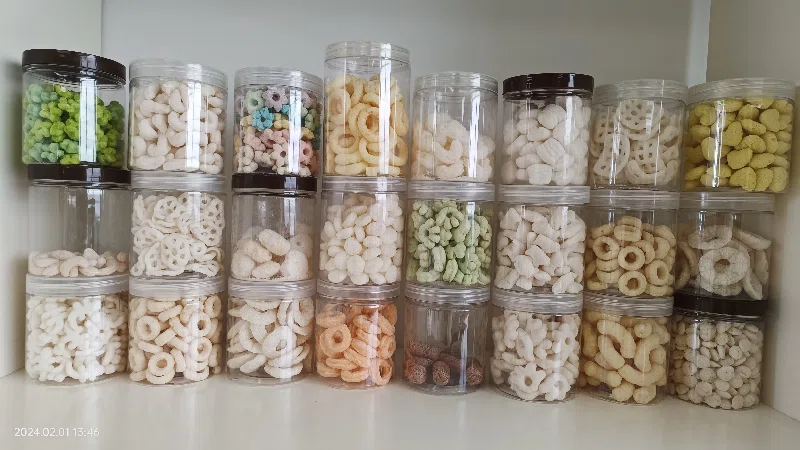
This is the beauty of the تشووهانغ system. The die (the mold at the end of the machine) is interchangeable. You can switch from "Quinoa Rings" to "Lentil Stars" or "Chickpea Curls" in less than 30 minutes. This versatility allows you to test new market segments with the same ماكينة نفخ الوجبات الخفيفة without investing in entirely new production lines.
-
6. Does the Puffed Snack Machine support the addition of "Super-Ingredients" like Kale or Beetroot?
Yes. These are "heat-sensitive" ingredients. To prevent the loss of color and vitamins, we utilize a "Cool-End" extrusion technique where the final section of the barrel is kept at a lower temperature, just enough to expand the product without destroying the vibrant natural colors of the kale or beetroot. This is a core part of the اتجاهات ماكينات الوجبات الخفيفة المنفوخة الصحية 2026 that we are currently pioneering.
-
7. What kind of space/footprint is required for a complete production line?
A full-scale إنتاج الوجبات الخفيفة المنفوخة بالكينوا line—including mixing, extrusion, drying, seasoning, and cooling—typically requires a space of about 25 to 40 meters in length and 5 meters in width. However, at تشووهانغ, we specialize in "U-shaped" or "L-shaped" configurations to fit your existing factory floor plan.
-
8. How long does it take for a new staff member to learn how to operate a zhuoheng Snack Puffing Machine?
Our systems are designed with a "Smart HMI" (Human-Machine Interface). Most of the complex pressure and temperature logic is handled by the PLC (Programmable Logic Controller). A typical operator can be fully trained in 3 to 5 days. We also provide comprehensive video manuals and 24/7 remote technical support.
If you are ready to explore how تشووهانغ can transform your production capabilities, please reach out to our technical sales team for a custom proposal.